
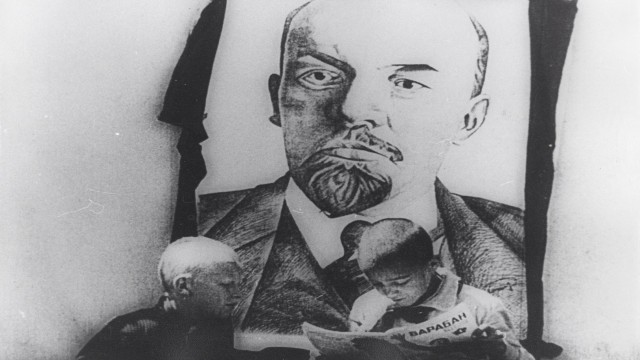
Kino-Eye

Where to Watch Kino-Eye

Kino-Eye is a distinctive and pioneering cinematic composition from 1924. This silent experimental documentary was directed by Russian filmmaker Dziga Vertov, who was an essential figure in the Soviet avant-garde film of the '20s and '30s. Known as "Kino-Glaz" in its original Russian title, Kino-Eye is a revolutionary work in the world of cinema that prioritizes reality over artificiality, strongly opposing the notion of staged dramas and fictional narratives.
The film highlights Vertov’s unique cinematic fabric, reflecting his idea of a 'cine-eye,' where the camera is an observer, recording the world impartially and candidly. Kino-Eye operates on the concept of cinematic truth – presenting the life as it is, rather than what it seems to be - encouraging the audiences to witness reality with an unbiased lens. It's an aesthetic choice that represented the principles of Kino-Pravda ('film-truth'), a newsreel series by Vertov.
Being a quintessential avant-garde work, Kino-Eye includes elements of Futurism and Constructivism. It’s densely packed with innovative cinematic techniques like rapid cutting, disorienting angles, slow motion, and double exposure, which were groundbreaking for its time. Vertov uses montage to juxtapose various slices of life, contextualizing the vibrant, visceral, and volatile reality of Post-revolutionary Russia.
Kino-Eye avoids traditional narrative structures, but rather it frames the daily life in Soviet Russia - shoppers at the market, crowds at a sports event, women working in a factory, a funeral etc. Through this lens, the film explores Soviet life from multiple angles, such as social, economic, and cultural aspects. Amidst this, the film doesn’t shy away from presenting the dichotomy of life, presenting the audience with an array of sequences that are at times mundane, at times exuberant, and at other times melancholic.
Despite the lack of dialogue and traditional plot, Vertov use of rhythm, movement, and montage succeeds in conveying a strong emotional impact. Kino-Eye does not only depict people and places, but also captures the atmosphere, the environment, the undercurrent emotions, and the unspoken dialogues subtly.
Moreover, Kino-Eye is also a self-referential work that explores the act of filmmaking itself. Vertov occasionally brings the camera and the cameraman into the frame, reminding the viewers of the presence and the observational nature of the cinema. This is an overt demonstration of Vertov's philosophy of ‘life caught unawares,' where the camera is an active participant and not a mere passive observer.
The cinematography of Kino-Eye, helmed by Mikhail Kaufman (Vertov's brother), is equally as radical and fearless as the film. Kaufman is often seen venturing into the crowds, markets, and streets, capturing the un-staged and un-manipulated life from a variety of unusual angles and perspectives. He is unafraid to mount his camera onto all sorts of moving objects, resulting in images that are both thrilling and realistic.
Kino-Eye’s approach to post-production is poetic and visionary. It uses editing not just to piece scenes together, but to create meaning. Through its non-linear, associative editing style, it brings together seemingly disparate images to create a tableau that reveals the depths of Soviet reality. It is not an understatement to say that Vertov molded the entire essence of the film on the editing table.
In conclusion, Kino-Eye is an outstanding film that operates as a historical document, an experimental film, and a theoretical manifesto, all at once. It transcends the conventional barriers of cinema, offering a kaleidoscopic view of human life, intimately embedded in its social, cultural, political, and economic context. Simultaneously, it raises probing questions about the nature of cinema, realism, and the complexities of human perception, marking itself as an essential work in the history of documentary filmmaking.
Kino-Eye is a Documentary movie released in 1924. It has a runtime of 78 min. Critics and viewers have rated it moderate reviews, with an IMDb score of 7.4..
How to Watch Kino-Eye
Where can I stream Kino-Eye movie online? Kino-Eye is available to watch and stream at Kanopy.
