

Bhoo Kailas
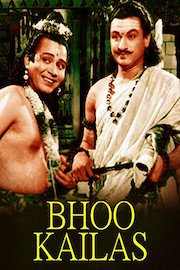
Bhoo Kailas

Where to Watch Bhoo Kailas

Bhoo Kailas is an enchanting mythological film that emerged from the Kannada film industry in 1979. The film features an ensemble cast of enduringly popular actors of the time, including the legendary Rajkumar and K. S. Ashwath. The film is a distinctive blend of myth and fable, beautifully reimagined with solid storytelling and sublime character performances.
Rajkumar, who is also known as "Annavru" or "the big brother" amongst his fans, plays the leading role in this film. He portrays the character of Ravana, the demon king of Lanka, and demonstrates his thespian prowess by successfully portraying an array of emotions. Every frame that captures Rajkumar is brought to life by his sterling performance. His portrayal of Ravana drinks deeper than the stereotypical demonic portrayal, instead presenting a character of depth and dynamism, who carries virtues and defects with equally charismatic splendor.
K. S. Ashwath adds more star power to the movie through his compelling performance. He effortlessly brings to life the virtue of loyalty and unwavering devotion through his character. He completes the spectrum of grandeur that this film ambitiously visualizes and successfully accomplishes.
Bhoo Kailas beautifully narrates the story from the Indian epic Ramayana with the underpinning focus on Ravana and his desire to conquer Bhoo Kailas. However, the movie masterfully veers away from providing a straightforward adaptation of the classic Indian epic. Bhoo Kailas cleverly allows the myth to serve as the backdrop against which it weaves its unique narrative.
The film navigates through various shades of the human experiences and emotions, traversing the landscape of ambition, ego, and moral dilemmas. It seamlessly introduces the viewers to diverse realms of divinity and the mortal world, while the narrative reinforces the essence of the ever-classic battle between the good and the evil.
What makes Bhoo Kailas a remarkable watch is its ability to encourage a deeper and more philosophical consideration on its characters, encouraging audiences to go beyond their mythological reputation. The storyline enforces the mantra that one's actions inevitably have consequences, regardless of one's materialistic possessions and power. The movie, thus, becomes a moral arc that navigates the ocean of karma and retribution.
In addition, Bhoo Kailas' strength lies in its gripping narrative, grand sets, elaborate costumes, and memorable dialogues that perfectly blend to create an idyllic and ethereal cinematic universe of myth and legend. The superior production quality and the detailed delicacies it brings onto the screen make the mythology appear vividly real and utterly enchanting, thus making the viewing experience a journey beyond the mundane, into the realm of divine epic.
The music of the film is another aspect that adds to its charm. The songs seamlessly integrate with the narrative, making them appear as an intrinsic part of the storytelling procedure. More than mere musical diversions, they serve as narrative aid, pushing the storyline forward, setting the atmosphere, or reflecting the emotions of the characters. Each song becomes a poetic soliloquy that contributes to character development and the philosophical undertone the film upholds.
In the landscape of Kannada film industry, Bhoo Kailas stands out as a mythological masterpiece in the annals of cinematic storytelling. For anyone looking to witness classic Indian cinema at its finest, the film proves to be an enticing watch. It effectively introduces the viewer to the rich tradition of Indian mythology, masterfully merging it with dramatic story-telling techniques. The stellar cast, engaging screenplay, mesmerizing music and meticulously detailed set designs make Bhoo Kailas an absolute must-watch, whether you are an ardent moviegoer or someone delving into the realms of Indian cinema.