
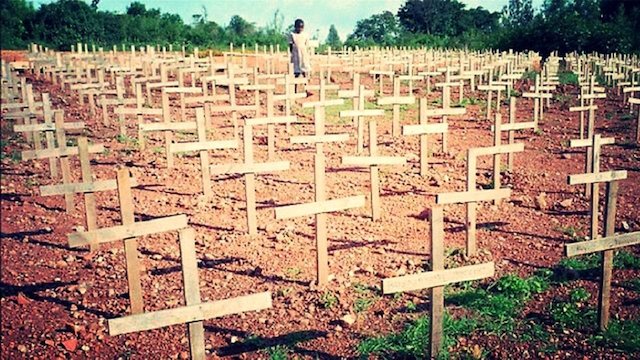
Worse than War
Worse than War
 7.4/10
Where to Watch Worse than War

Worse than War from 2009 is a thought-provoking and intricately woven documentary centered around the meticulous research and illuminating insights of its presenter, Daniel J. Goldhagen. This political science professor, prolific author, and highly renowned Holocaust scholar travels across nine countries to provide an in-depth and comprehensive exploration of genocide, a horrific phenomenon that has repeatedly scarred the landscape of human history.
The documentary is based on Goldhagen's critically acclaimed book "Worse than War: Genocide, Eliminationism, and the Ongoing Assault on Humanity." Directed by Mike Dewitt and produced by Public Broadcasting Service (PBS), this film intentionally and emphatically shifts the audience's focus towards the fundamental determinants and tragic consequences of genocide, beyond a merely historical or statistical perspective.
In Worse than War, Goldhagen seeks to answer pervasive questions: Why do genocides occur? What circumstances or ideologies can bring about such catastrophic events? Why do people participate in mass murder of their fellow citizens? Why does the international community often fail to intervene? What can be done to prevent future occurrences? These inquiries are addressed through an exhaustive investigation filled with poignant testimonies, expert interviews, undisputed facts, and agonizing details of genocides and mass atrocities spanning from the Holocaust to more recent disasters.
Goldhagen’s approach is largely participatory in nature; he immerses himself into the stories, visits genocide sites, researches harrowing data, and engages in in-depth conversations with survivors, witnesses, perpetrators, politicians, scholars, and individuals directly affected by these events. The on-the-ground investigation offers an immersive, direct understanding of the complicated inner workings of societies plagued by genocide, providing viewers with an intensely personal and heartrending viewpoint into these tragic events.
The documentary takes viewers on a journey crossing continents and decades, exploring events like the genocide of Jews during the Holocaust, the ethnic cleansing in Bosnia, and the devastating genocide in Rwanda. It delves into the disturbing methodologies of mass extermination and depicts the grim aftermaths that extend beyond physical deaths, illustrating the social, political, and psychological impact that haunts survivors and echoes through generations.
In Rwanda, Goldhagen explores how racial scapegoating and relentless propaganda led to the swift and brutal extermination of nearly one million Tutsis over three terrifying months in 1994. In Guatemala, he studies the brutal ethnic cleansing the indigenous Mayans faced under military rule. In Germany, he reflects on the Holocaust, exploring both the chilling efficiency of the Final Solution and instinctive human compulsion towards cruelty and violence when fueled by hate.
Throughout the film, the message is subtle but unmistakable - genocide isn't an event; it's a process, often a culmination of smaller, seemingly isolated incidents escalated by manipulative regimes, overlooked by the public, and enabled by global political apathy.
However, Worse than War isn't just an exposé of humanity’s darkest times. It's also a plea for action, a call for global responsibility. Goldhagen does not just debate and analyze these historical atrocities but also reinforces his advocacy for international intervention and prevention frameworks. His belief in the crucial role of political will in stopping future genocides provides a glimmer of hope amidst the heartbreaking narratives.
The film consistently maintains a careful balance between the scholarly and humanitarian aspects of its narrative. It adopts a distinctively empirical approach, combining historical facts, political analysis, and first-hand stories to demystify concepts and challenge universally accepted norms around genocides. But it doesn’t lose sight of the human aspect of these tragedies, ensuring a high level of sensitivity and respect for the survivors whose stories may not have otherwise been heard.
Visually, the documentary delivers bare, often haunting images of genocide sites, enabling authentic and direct connection with the human experience. Its straightforward and compelling presentation style appeals to both intellect and emotional understanding. Above all, the film encourages active viewer engagement, fostering critical dialogue and reflection on the catastrophic occurrences of genocide.
Bearing at once a powerful historical record and a prophetic warning, Worse than War offers a brave and unshakeable look at the costs of genocide. Viewers are prompted to arrive at a heightened understanding - not just of the horrifying escalation of mass violence, but also the possible ways to thwart it - pushing individuals and societies towards introspection, alertness, and action.
Worse than War is more than a film. It's an essential conversation on the grim realities of violence wrought by identity-based conflict, from a time when we perhaps need it the most. It dares to ask the difficult questions and insists on seeking answers that could hold the key to our collective future.
7.4/10