

Trikaal
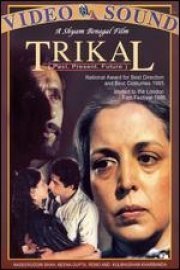
Trikaal

Where to Watch Trikaal

Set in 1961, right before the rise of Goa's liberation movement, the movie Trikaal paints a picture of a time and place that is as captivating and complex as its characters. Filled with nostalgia, it powerfully portrays the intricate dynamics of family, class, and politics amidst the backdrop of a fast-approaching revolution. The film is directed by Shyam Benegal, widely known for his unique cinematic approach to social issues, rendering Trikaal yet another significant gem in Indian parallel cinema.
Trikaal captures the story of a rich, Portuguese-Goan family known as the Souza-Soares. Patriarch Ernesto Souza-Soares (Leela Naidu) is a staunch supporter of the Portuguese rule, having profited greatly from it. However, under this surface of seeming perfection and privilege, lies a melting pot of secrets and tensions. A large part of the movie revolve around the family's intricate dynamics. Ernesto's wife, Dona Maria Souza-Soares (Anita Kanwar), runs the family, suppressing the faintest hint of scandal, while their daughters - Sylvia (Neena Gupta), and Aurora (Soni Razdan) - are at the receiving end of societal expectations and restrictions.
Neighourhood lawyer, Milagres Proencà (Dalip Tahil), is yet another key character - an opportunist navigating the changing political landscape, adjusting his loyalties to suit his ambitions. Meanwhile, the faithful family servant, Maria (K.K. Raina), holds the family together with a loyalty that’s more familial than servile. These characters, along with several others, are finely etched, multidimensional, and distinctly believable, enhancing the intricacy of the narrative.
Dr. Luis (Naseeruddin Shah), an idealistic young man who stands against the Portuguese rule and is in love with Sylvia, is a stratum that adds a deeper political dimension to the storyline. The two's love story is dealt with subtlety, without overshadowing the primary narrative.
The triumphant point of the movie Trikaal is the portrayal of Goa's socio-political situation at the cusp of independence from the colonial Portuguese rule. Despite the family living in immense luxury and under protection from the Portuguese rule, the tremors of revolution creep into their lives. The movie proves how such revolutions are not limited to the public squares; they also creep into private spaces, affecting families and transforming lives.
The film has a nonlinear structure – rather than a linear progression, it prefers to string together a series of episodes, almost like snapshots of a larger picture, which gives a deeper understanding of the characters’ psyche, their social environment, and the shifting political landscape.
In terms of technical aspects, the film deserves applause. The cinematography captures the charm and ambiance of Goa, effectively creating a time-vignette of the '60s. The music, consisting of Konkani songs and Portuguese tunes, further enhance the film's narrative fabric.
The performances by the ensemble cast are exceptional. Naidu's portrayal of Dona Maria is both commanding and vulnerable. Kanwar as the matriarch manages to hold her fort and the family's honor amidst the turmoil. Gupta and Razdan bring out the complexities of their characters, adhering to traditional expectations while yearning for personal freedom. Tahil portrays the opportunistic lawyer with apt cynicism, while Naseeruddin Shah, in his limited appearance, leaves an indelible mark.
Trikaal is an impressive blend of political drama and family saga that manages to not just tell a story but also transport the audience to a space and time that seems vividly real and palpable. It explores the themes of societal class, political shifts, and familial ties with a depth and subtlety that's rare in Indian cinema.
In conclusion, Trikaal is a thought-provoking, well-crafted piece of cinema that beautifully captures the essence of a rapidly changing Goa. It stands out with its immersive storyline, impeccable performances, and an insightful depiction of a critical juncture in the history of Goa. Those who appreciate parallel cinema and historical dramas will find this film an enriching watch.