

The Last Pullman Car
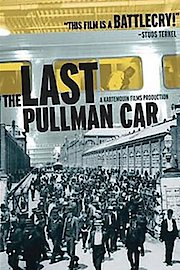
The Last Pullman Car
 8.1/10
Where to Watch The Last Pullman Car

The Last Pullman Car is a thought-provoking documentary from 1983, directed by the skilled team of Gordon Quinn and Jerry Blumenthal. Produced by Kartemquin Films, the movie acts as a visceral eye-opener to a critical historical period, expertly using the medium of film to narrate the pains and plight of the labor community. By focusing on the closure of the Pullman-Standard factory in Chicago, it illuminates broader sociopolitical and economic issues related to labor unions, manufacturing decline, and the struggle for workers' rights in the United States.
Embarking on an immersive journey into the lives of the Pullman workers, the film directly confronts the industrial predicament prevalent during the early 1980s. It peels back the troubled layers of America’s manufacturing decline, gradually revealing the stark realities of the skilled laborers who once formed the backbone of American industry. The titular Pullman Car represents a once thriving, innovative, and illustrious industry that found itself on the brink of extinction when Pullman-Standard, one of the country's largest manufacturers of rail cars, decided to close down its facilities. This decision considerably impacted the livelihoods of the thousands of men and women who worked there, marking the end of an era.
The Last Pullman Car combines intensely personal stories with a broader political and economic commentary. It stands as not just a documentary about a factory closure, but also a deeply impactful exploration into the socio-economic landscape of the time. The central characters of the narrative are the representatives of United Steelworkers Local 1834 at Pullman-Standard. It chronicles their fight against the loss of their jobs while confronting the decline of their union and, by extension, the wane of the American blue-collar landscape.
One of the remarkable aspects of The Last Pullman Car is the way it balances narrative drive with historical context. It meticulously traces the history of the Pullman Company, starting from the late 19th century when it was a booming industry, a symbol of America's economic prowess, to the early 1980s when it faced closure.
Pivotal to the understanding of The Last Pullman Car is the realization that the Pullman Company was more than just a major player in America's railcar industry. George Pullman, the founder, transformed the very landscape of labor in Chicago and the U.S. He built an entire town, Pullman, for his workers - a place where employees lived, worked, and breathed under the auspices of the company. However, the idyllic facade masked deeper unrest, ultimately culminating in the infamous Pullman Strike in 1894. This significant event is a haunting backdrop to the 1983 story, emphasizing a cyclical pattern of labor struggles.
The Last Pullman Car is masterfully helmed by Quinn and Blumenthal. Their direction brings viewers close to the struggles, fears, and anger of the workers, capturing raw emotion amidst the industrial decline. They provide a poignant snapshot of a time when mass production jobs were beginning to vanish, factories became silent, and childhood dreams of continuing family legacies of hard-earned labor in the factories started to crumble.
The movie stands as a stark reminder of the harsh realities faced by workers. It explores their anxieties, revitalizes the narrative of their struggle, and encourages viewers to question the broader implications of losing these jobs. This isn’t just a localized issue. It reflects a substantial shift in America’s industrial prowess, labor union strength, and the struggles faced by blue-collar communities, making it a valuable historical document that resonates even in contemporary times.
In sum, The Last Pullman Car presents an empathetic, firmly grounded, and deeply moving exploration of an era of socio-economic change, capturing an intimate portrait of the labor struggle centered around the Pullman-Standard factory. Its legacy continues to reverberate, invoking introspection on the state of workers' rights, economic disparity, and the shifting dynamics of the American industrial landscape.
8.1/10