

The Gay Marriage Thing
The Gay Marriage Thing
 8.1/10
Where to Watch The Gay Marriage Thing

The Gay Marriage Thing is a provocative and engaging 2005 documentary exploring the intersectionality of civil rights, politics, religion, and the significant issue of same-sex marriage in the United States. Directed by Stephanie Higgins, this film provides a balanced examination of a timely and progressive topic that has garnered substantial attention in American society.
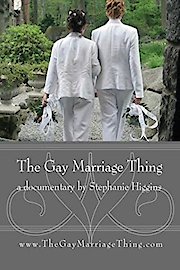
The documentary takes a closer look at two lesbian couples living in Massachusetts, a state that became the first one in the U.S. to allow same-sex marriage in 2004. The couples, Kathi and Kimberley and Ellen and Jeanne, serve as focal points in this exploration of the impact and meaning of this controversial issue on a personal level. Through their stories, viewers gain intimate insight into their lives, as well as their struggles and joys, as they navigate their relationships amid the broader political and social climate surrounding same-sex marriage.
One of the couples, Kathi and Kimberley, are preparing for a wedding ceremony, and their journey takes up a significant portion of the screen time. The excitement, anticipation, and anxiety linked to their plans give the audience a real sense of the human side of the abstract political debates swirling around them. Concurrently, older couple Ellen and Jeanne give insight into the challenges and precious moments that have defined their long-term commitment, adding a valuable perspective on the human right to love and be loved.
The Gay Marriage Thing doesn't shy away from presenting the arguments against legalizing same-sex marriage either. It includes interviews with conservative religious leaders and politicians who strongly oppose it, framing these conversations within a broader historical and societal context. A variety of voices offering differing perspectives helps to present a balanced view of this divisive issue, grounding the film in a realistic exploration of human rights.
Moreover, the film spends a significant amount of time delving into the legal, theological, and sociopolitical debates surrounding same-sex marriage. It opens up a broader conversation about the definition of marriage and the role of the state in determining who has the right to wed. It delves deep into controversial legal matters such as the Defense of Marriage Act (DOMA) and Proposition 8. At the same time, it explores the contrasting views held by different religious denominations on the matter.
The documentary excels in facilitating a dialogue, where both proponents and opponents can have their views heard. It addresses the tension between traditional values and progressive shifts in societal norms. It also explores how public opinion on same-sex marriage has evolved over time, signifying the changing perception of the LGBT community within the context of civil rights in the United States.
The Gay Marriage Thing uses a thoughtful blend of interviews, verité footage, archival material, and a handpicked soundtrack to bring its narrative to life. Cinematographer Eric Juhola captures compelling frames that give viewers an unfiltered look into the complex lives, relationships, and concerns of those affected by the issue. The film has moments of unexpected humour, underlining the absurdity of the discrimination faced by same-sex couples. The documentary reminds viewers that topics such as these, as politically charged as they might be, are ultimately about people’s lives and should be approached with empathy and respect.
In summary, The Gay Marriage Thing is a compelling examination of one of the most contentious civil rights issues in recent American history. Through personal narratives intertwined with diverse perspectives, this documentary presents the complexities behind the issue of same-sex marriage, eliciting an empathetic understanding of what it’s like to live, love, and fight for recognition in the face of legal and social discrimination. Although the narrative is situated within a particular historical moment, it continues to resonate with audiences today, serving as an essential conversation piece on the journey towards greater equality.
8.1/10