

San Yuan Li
San Yuan Li
 5.6/10
Where to Watch San Yuan Li

San Yuan Li, released in 2003, is an experimental Chinese black and white documentary that delves into the urban space and social history of the city of Guangzhou through a unique lens. The creative force behind this cinematic exploration is the artist group Ou Ning and Cao Fei (also known as China Tracy), who are acclaimed for their innovative cross-disciplinary approach, encompassing film, art and architecture. With length of 45 minutes, San Yuan Li was commissioned for the '50th Venice Biennial,' 2003 and ‘the second Guangzhou Triennale,’ 2005, which forged its immediate international significance.
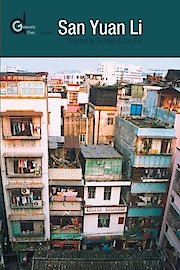
Defined by the abstract spatial narrative and arresting visual montage, the documentary takes its name from a crafts village in Guangzhou, San Yuan Li. The village has a monumental historical background as the site of the 1841 uprising against the British during the Opium War. In today’s context though, like a time-capsule, San Yuan Li exists in stark contrast to the modern metropolis with glass towers and bustling streets. Tucked away amidst the towering skyscrapers, this village encapsulates a semi-rural microcosm preserving the traditional Chinese lifestyle.
The filmmakers approach the urban landscape with an inventive mixture of aerial shots, standstill frames and close-ups, which serve to reconnect and reshape the grassroots and global views of urban transformation. With the area’s rapid urbanization and modernization in the background, San Yuan Li emerges as an exploration of changing Chinese identity and dynamic socio-economic relations.
A peculiar aspect of this documentary is its lack of dialogue, narrative voice-over, and traditional storytelling arch. The fascinating visual narrative relies solely on its images and ambient sounds to convey the tale of dichotomy and contradiction between the rural and the urban, the past and the present, tradition and modernization. The film-makers employ video collage and innovative editing techniques that give an aesthetic rhythm to the film, which serves a purpose beyond mere structural representation.
The camera, in San Yuan Li, acts as an observant yet subjective participant, spotlighting the ambiance, routine, and lives of the village inhabitants amidst their traditional houses, narrow alleyways, and collective workspaces. It captures the life of the elderly inhabitants playing Chinese chess, women sewing together in silent harmony, children playing around the narrow streets, among other quotidian details. At the same time, the simultaneous presence and indifference of the metropolitan city looms large in the background. Thus, the film visualizes the contested space and the tug of war between the traditional living pattern and the encroaching urban pressure.
Another outstanding facet of this architectural documentary is its evocative sound design. Unlike the traditional documentary, San Yuan Li immerses viewers into the environment with the natural sounds of the environment. The clinking sound of Mahjong tiles, the chirping of birds, the hammering of craftsmen, and the occasional sounds of a village immersed in conversations with each other, give rhythmic tonality that adds emotional depth to the film’s visual narrative.
On a broader socio-cultural context, the film offers a study of the impacts of global capitalism and the rapid urbanization of China. It provides an account into the growing socio-economic disparity, the disenchantment with urban life, and the resistance towards global capitalism eating into the local, grassroots fabric of China.
San Yuan Li strikes a deep chord with its timeless relevance and significance. In an age of rapid urban development, the film is a subtle reminder of the layers of history, tradition, and culture that underpin our booming cities. The film's striking cinematographic attributes and narrative style promises to be a captivating watch for those interested in urban studies, social history, or simply appreciative of the interplay of art, architecture, and film.
5.6/10