

Salero
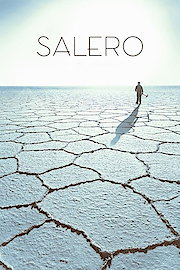
Salero

Where to Watch Salero

Salero is a noteworthy documentary film released in 2015. Directed by Mike Plunkett, the film sheds light on the visual spectacles as well as the social and economical aspects of the world's largest salt flats— the Salar de Uyuni in Bolivia. Through the story of the last traditional salt gatherer (a "salero" in Spanish) at the Salar, this film explores the striking intersection of one of the planet’s largest resource deposits and the most significant transformation brought by industrialization.
The film primarily tells the tale of Moises Chambi Yucra, an indigenous Bolivian man who works as one of the last remaining saleros. It beautifully captures his traditional way of life—how he shovels grains of salt by hand, shepherding them into small mounds, all while navigating the stark-white expanse of the Salar. Moises’s voice-overs interspersed throughout the film establish a genuine connection with the audience. His simple yet profound observations touch upon the existential themes of life, change, and time, providing an effective contrast to the vast emptiness and silence of the Salar.
Salero is set against Salar de Uyuni's surreal white landscape, spreading an area of twelve thousand square kilometers, making it the most extensive salt flat on earth. This salt flat, a byproduct of prehistoric lakes that dried up and evaporated thousands of years ago, is a stark and eerie wilderness. The Salar is also rich in lithium, which is now becoming "the new oil" globally, as it a vital component for everything from smartphones to laptops to electric cars. The Bolivian government, recognizing the increasing global demand for lithium batteries, has initiated plans to mine this critical resource, threatening the slow-paced, simple lifestyle of people like Moises.
The film effectively presents this clash of modernity with traditions and simplicity. For Moises, whose family has worked these flats for generations, such industrial progress means the end of the lifestyle he's known, forcing him to reconsider his future and the welfare of his family. His personal growth and the resultant internal conflict he faces form the crux of the movie's narrative. However, the looming shift brought by this industrial progress is not portrayed as outrightly malicious but a complex juncture, where the promise of a prosperous future threatens an age-old way of life and culture.
The cinematics of the movie are worth a mention, as it presents the surreal and breathtaking panorama of the salt flats in all their magnificence, sunset hues, and twinkling night skies. The visuals weave an incredible narrative in themselves. The contrast of the harsh white landscape of the salt flats against the night sky, full of stars, adds to the overall emotion of the film. It provides a backdrop to the human lives that are intrinsically entwined with the landscape. Throughout the movie, emphasis on minimal, almost hauntingly beautiful landscapes, imbibed with a silent vastness, allows the audience to connect as we witness the melancholy of impending change.
Salero manages to evoke a bouquet of emotions through its narrative. There's a romantic sadness in seeing Moises's way of life disappear, but there's also a sense of hope for better economic prospects for the region. The film successfully puts forward a narrative about the changing landscapes of cultures, traditions, and life itself with a philosophical and existential depth.
In terms of its format, Salero steers clear from persuasion and advocacy, instead choosing to engage its viewers through the sheer power of observation. It lets the Salar, with the backdrop of the upcoming monumental change, and Moises's simple lifestyle speak for themselves.
In conclusion, Salero is a mesmerizing narrative, rendering quiet and contemplative moments perfectly. Its ethereal cinematic style, dramatic landscape, and the personal story of Moises come together to create a portrait of a changing world. This documentary is a visual poem that transcends the traditional boundaries of its genre to confront the audience with the conflicting sides of progress at the frontier of global changes.