

Muzaffarnagar Baaqi Hai
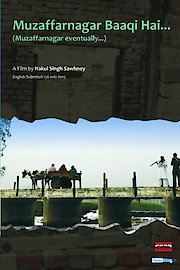
Muzaffarnagar Baaqi Hai
 4.1/10
Where to Watch Muzaffarnagar Baaqi Hai

Muzaffarnagar Baaqi Hai is an evocative documentary directed by Nakul Singh Sawhney released in 2015. The film is an examination of the riot-torn region of Muzaffarnagar and Shamli, comprising parts of Western Uttar Pradesh in North India. The narrative embarks on a journey to uncover the reality and reasons behind the communal riots that swept through the region in 2013, indelibly marking the lives of the inhabitants.
The genius of the film rests on its ability to intertwine personal stories with political narratives, providing an unfiltered and immersive view into the often-polarizing world of communal politics. This pivotally important film is produced by Shubhradeep Chakravorty and Meera Chaudhary, whose profound understanding of the Indian sociopolitical landscape is clearly visible in the handling of the subject matter and the engrossing narratives that form the crux of the film.
The premise of Muzaffarnagar Baaqi Hai is set against the backdrop of the 2013 riots in Muzaffarnagar and Shamli, where communal violence claimed many lives and dislocated thousands of families. The documentary skillfully presents the less explored and commonly misunderstood aspects of communal hatred, uninhibited violence, and social divisions. This eye-opening film puts humanity at the center, delving deep into the personal experiences of individuals affected by the violence. It presents their despair, the dream of a harmonious coexistence, and their relentless hope for justice.
The film’s director, Nakul Singh Sawhney, showcases impressive directorial skill, balancing the retelling of tragic events and challenging socio-political tussles. Sawhney's approach provocatively examines the factors that led to the riots and the subsequent political maneuvers, while maintaining a gripping storytelling format. His authentic depiction of Muzaffarnagar and its people paints a real picture of the ground reality rather than a sensationalized media narrative.
The narrative of Muzaffarnagar Baaqi Hai is delivered through a series of interviews with victims, survivors, activists, academics, and political leaders from various parties, all of whom provide different perspectives on the events and their aftermath. What makes this film chillingly impactful is the raw, unembellished depiction of pain and loss as seen through the eyes of the victims. The interviews add a human element to the otherwise political narrative, lending the film its emotional core.
The film meticulously explores the multifaceted layers of communal tension, the politics of division, and the deep-seated biases that often lead to catastrophic consequences. In doing so, it also recounts a familiar narrative of inequality, injustice, and social disharmony that, sadly, echoes in many parts of the world. It is a bold indictment on the power structures and sociopolitical elements that foment communal discord, disrupt social harmony, and traumatize humanity.
Muzaffarnagar Baaqi Hai is not just a tale of survival and displaced families, but also a probing commentary on the brutal cycle of violence and the divisive politics fueling it. The documentary brings to the fore ignored stories of women and disenfranchised communities who face the double jeopardy of being victims of violence and the marginalized. This examination of the intersectionality of caste, religion, and gender-based violence offers unique insight into the deep-rooted prejudice and misogyny prevalent in society.
Brilliantly produced by Shubhradeep Chakravorty and Meera Chaudhary, the documentary doesn't shy away from difficult questions about communalism, political maneuvering, and social inequality while shedding light on the human cost of such discord. With powerful interviews and haunting visuals, the film stands as a poignant reminder of the tragic consequences of our times.
In conclusion, Muzaffarnagar Baaqi Hai is a critically acclaimed and thought-provoking documentary that peels back the veil to expose the grim realities of communal violence in contemporary India. Its powerful storytelling, coupled with its focus on human resilience and hope amidst despair, makes it a must-watch for anyone interested in understanding the complexities of the human cost of communal tension in India and across the globe.
4.1/10