

Mother: Caring for 7 Billion
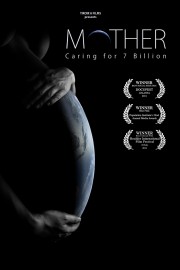
Mother: Caring for 7 Billion
 7.6/10
Where to Watch Mother: Caring for 7 Billion

Mother: Caring for 7 Billion is a gripping documentary released in 2011, directed by Christophe Fauchere, which explores the issue of world population growth in the context of the 21st century. The film stars Esraa Bani, Albert Bartlett, and Lester Brown, and uniquely approaches the population issue through a human rights perspective, specifically looking at the roles women play within this global challenge.
The film unveils the dramatic, and often jarring, reality of our increasing world population and its impacts on our environment, economies, and quality of life. The viewer is walked through several countries, societies, and cultures. This journey, led by notable figures in the fields of social sciences and environmental studies such as Esraa Bani, Albert Bartlett, and Lester Brown, effectively presents different perspectives and grounds the viewer in a socio-political reality that both challenges and educates.
Mother: Caring for 7 Billion begins with a profound question: Can we sustain a world of 9 billion people? From this point, the film dives into the intricacies of overpopulation, focusing on the intersectionality of population growth and women's rights. This connection is brilliantly portrayed through the journey of a character named Beth, a child rights activist and mother. Her journey questions the tradition of early and forced marriages that propagate high fertility rates and broaches challenging conversations on consumption patterns and lifestyle choices.
The film effectively uses storytelling, data, expert interviews, and very striking visuals, painting a vivid picture of a nexus of unexplored yet intertwined global challenges that start with the unprecedented growth of the human species. The core narration of the story is shared by university emeritus professor Albert Bartlett. With his wealth of knowledge and influences, Professor Bartlett, armed with critical thought and the power of "simple exponential arithmetic," paints a hefty backdrop for the narrative.
Lester Brown, an environmental analyst, also offers his expert opinions on the effects of population growth on our environment. His insightful analyses pepper the film with a wide range of perspectives, promoting an understanding of the issue at multiple levels. He covers topics such as climate change, deforestation, food and water scarcity, and energy consumption, each being directly or indirectly impacted by population dynamics.
Esraa Bani's role, though strategically less explicit than Bartlett and Brown, resonates significantly because it offers on-the-ground experiences and observations. As a woman living the realities explored in the narrative, her candid views complete the representation and strengthen the film's arguments.
Directors Christophe Fauchere and Joyce Johnson effectively show the audience how the population issue is much more than just a numbers game. It's a complex web of human rights, environmental conservation, gender equality, sustainable development, and economic viability. Their approach to this challenge also raises awareness of women’s rights as a powerful tool to address population growth. They delve into contraception, education, and female social status, illustrating how empowering women can have a dramatic and positive effect on reducing population growth and enhancing sustainability.
The film does a stellar job of drawing portraits of different societies, from India to Africa to the United States. Each culture is examined and appreciated in its unique way, with the common thread of human population leadership and its implications weaving through all. Each snapshot adds a piece of the puzzle towards a complete picture of how our world is coping with population pressures and how we might enhance our collective response to this most fundamental of challenges.
In its entirety, Mother: Caring for 7 Billion is a compelling discourse on a topic often overlooked in mainstream conversation, loaded with substance that challenges existing paradigms. The film is not just about presenting existential problems; it is about conceiving an alternate reality where problems can be solved through a decentralized model of cultural transformation. More importantly, this film is a lesson in empathy, promoting a significant dialogue about our precious planet and the families and communities that inhabit it.
In sum, Mother: Caring for 7 Billion is a thought-provoking documentary that presents a nuanced perspective on global population growth. It effectively demonstrates the urgent need for change without losing sight of the human element within the equation. This film encourages its viewers to not only consider the implications of their actions on a crowded planet but also to consider solutions that value and uplift human dignity.
7.6/10