

Last Station, The
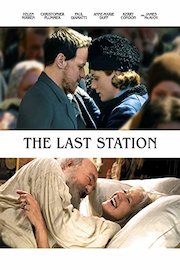
Last Station, The

Where to Watch Last Station, The

The Last Station is a captivating drama that explores the life of famed Russian author Leo Tolstoy in his final years. Directed by Michael Hoffman and initially released in 2009, this engaging and emotionally driven piece boasts an incredible cast, led by the Oscar-winning Helen Mirren and Christopher Plummer.
In the movie, Christopher Plummer delivers an exceptional performance as the renowned author and philosopher Leo Tolstoy. We find Tolstoy in the twilight of his life, where the conflict between his ideas and his lifestyle becomes more prominent. The film introduces Tolstoy as an individual struggling with the complexities of his fame, wealth, and philosophical principles, which advocate for a simplistic and austere lifestyle.
Opposite him, Helen Mirren personifies Tolstoy's wife, Countess Sofya. Mirren's magnetic portrayal of the fiercely passionate, yet emotionally fragile Countess, is what makes the film worth every minute. Sofya, who is in conflict with her husband's followers and indeed Tolstoy himself, is desperate to secure her family's future. She fears that Tolstoy's advisors are scheming to persuade him to change his will, leaving his valuable intellectual property rights to the public and stripping her and her children of their inheritance.
A significant feature of the narrative is the brilliant interplay between this aging couple who, despite their respective frustrations with each other, still cherish a profound love. The film vividly captures the emotional struggle, fear, resentment, and frustrations of a long-standing relationship undergoing massive strain. The disagreements they have are not just marital but ideological, bringing into light the complexities entangled within personal philosophies, societal expectations, and a family's future.
James McAvoy rounds out the ensemble cast in the role of Valentin Bulgakov, Tolstoy's new private secretary. Bulgakov is a young, idealistic admirer of the phenomenal writer, and desires to fully imbibe Tolstoy’s principles. However, he finds himself caught in the familial and philosophical discord between Tolstoy and Sofya, which result in a crisis of conscience for the young man. The movie subtly portrays the personal evolution of Bulgakov as he is pulled between his devotion to Tolstoy's ideological tenets and his sympathy for Sofya's strenuous plight.
The Last Station is more than an exploration of Leo Tolstoy's last chapter; it becomes a stage to explore the serenity, chaos, passions, and conflicts that come with fame, devotion, ideals, and above all, love. The cinematography complements the narrative beautifully as it captures the grandeur of the Russian countryside, bringing an added layer of authenticity to this historical drama.
Director Michael Hoffman does an excellent job of crafting a film that, in essence, is an intimate family drama but carries the weight of pressing societal philosophies. He strikes the balance between fact and fiction, adeptly knitting historical truth with dramatic license, to engage the audiences in an enthralling narrative. The movie serves not only as a cinematic tribute to one of the greatest minds in literature but also as a touching exploration of love, dedication, and the costs of idealism.
In summary, The Last Station, is an expertly executed film that captures the complexities of Tolstoy's twilight years through excellent performances and thought-provoking storytelling. Christopher Plummer and Helen Mirren give stellar performances. Their passion and energy are laudable, and their portrayals bring the intricate relationship between Leo Tolstoy and Countess Sofya to life in a memorable way. James McAvoy, too, gives a compelling performance, speaking to the struggles of navigating loyalty, ideologies, and personal ambitions.
Overall, The Last Station offers a profound and intimate glance into the final days of a literary giant, brought to life by a cast that lends depth, emotion, and authenticity to their roles. It is a must-watch for fans of literary adaptations, historical dramas, and powerful character studies.