

Hassan and Marcus
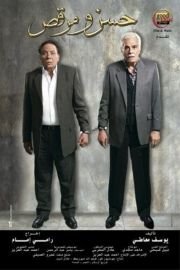
Hassan and Marcus

Where to Watch Hassan and Marcus

"Hassan and Marcus" is an Egyptian comedy-drama film that brings together the talents of two of the Arab world's most celebrated actors, Adel Imam and Omar Sharif. Released in 2008 and directed by Rami Imam, this film not only offers a mesmerizing tale but also interweaves a potent social commentary that resonates with audiences both within and beyond the Arab-speaking world. The movie co-stars Lebleba and Mohamed Imam, adding depth and talent to an already impressive cast.
The film unfolds as a story of two families, one Muslim (Hassan's) and one Christian (Marcus's), whose lives become intertwined after a series of unexpected and life-altering events. Adel Imam plays the character of Hassan, a devoted Muslim who, amidst a backdrop of social and religious tensions, finds himself faced with extreme circumstances that test his faith and identity. Omar Sharif depicts Marcus, a pious Christian and music professor whose own beliefs and convictions are equally scrutinized through a series of trials.
Set in modern-day Egypt, "Hassan and Marcus" does more than just narrate the tale of two men; it paints a portrait of a society grappling with issues of religious tolerance, identity, and coexistence. As the film deepens, viewers are treated to a nuanced narrative that, while punctuated by comedic moments — a trademark of Adel Imam's stellar performances — doesn't shy away from the drama and complexity of real-life frictions between different faith communities.
Lebleba plays the role of a woman caught between the crossfires of tradition and change, representing a voice of reason and compassion in a world often led astray by prejudice and misunderstanding. Mohamed Imam, a rising star in Egyptian cinema and the actual son of Adel Imam, adds a generational dimension to the film, portraying a young character whose experiences and interactions offer a fresh perspective on age-old dilemmas.
The brilliance of "Hassan and Marcus" lies in its ability to engage the audience in laughter while simultaneously prompting deep reflection on serious societal issues. The movie's comedic elements are carefully crafted not to diminish the gravity of its subject matter but rather to make it accessible and relatable to a wide audience. This balance is a testament to the scriptwriting and direction that allow the film to deliver its message without losing the entertainment value.
On the technical front, the film showcases adept cinematography that captures the essence of Egyptian streets, homes, and daily life, grounding the narrative in a tangible reality. The original score, interlacing traditional and contemporary influences just like the storyline itself, creates an additional emotional layer that draws the viewers deeper into the world of the characters.
Perhaps the most intriguing aspect of "Hassan and Marcus" is how it deals with the universal theme of common humanity in the face of conflict. The protagonists, Hassan and Marcus, while deeply rooted in their respective religious identities, embark on parallel journeys that reveal more about what unites them than what divides them. Through a mixture of humor, drama, and the occasional thrill, the film bears a hopeful message about the possibility of reconciliation and the power of empathy.
By leveraging the star power and formidable acting prowess of Imam and Sharif, "Hassan and Marcus" does an exceptional job of drawing in viewers who may be fans of these actors' expansive bodies of work. This familiarity serves to amplify the impact of the narrative, as audiences can relate more readily to characters portrayed by actors they have longstanding respect and admiration for.
The interplay between characters within each family adds another layer to the film, revealing the internal struggles and debates within each religious community. Viewers witness the extent to which personal convictions can diverge from societal expectations, leading to moments of both inner turmoil and outward defiance.
"Hassan and Marcus" offers a necessary dialogue in the form of cinematic storytelling, a dialogue that goes beyond the confines of Egyptian society and taps into a global conversation about religious harmony and human connection. The film's ability to maintain a lighthearted tone while tackling head-on such delicate topics is a remarkable feat, making it not only an entertaining watch but also a culturally and socially relevant piece of cinema.
In conclusion, "Hassan and Marcus" is a film that triumphs as a work of entertainment and a poignant study of humanity’s potential for unity amidst diversity. Its legacy is carried by the strong performances of its lead actors and the important message it conveys, one that continues to resonate with audiences around the world and contribute to the ongoing discourse on religious tolerance and human coexistence.