

Elementary Genocide 2: The Board of Education vs The Board of Incarceration
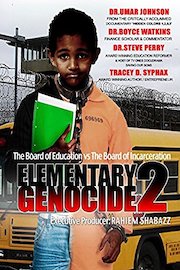
Elementary Genocide 2: The Board of Education vs The Board of Incarceration

Where to Watch Elementary Genocide 2: The Board of Education vs The Board of Incarceration

Elementary Genocide 2: The Board of Education vs The Board of Incarceration is a riveting and hard-hitting documentary film that delves into the grim reality of the American education and justice systems, featuring powerful, in-depth interviews with renowned educators, authors, journalists, activists, and other influential figures. This documentary is a sequel to Elementary Genocide: The School to Prison Pipeline, and is a part of a trilogy series crafted by award-winning filmmaker and director Raheim Shabazz. It continues the conversation around the disturbing trend of pushing minors, notably African American and Latino children, out of educational environments and funneling them into systems of incarceration.
The film centers on the premise of a parallel drawn between the educational board and the incarceration board. It scrutinizes the often-overlooked relationship between under-funded, poorly-managed schools, and the swelling numbers of the American prison population. This provocative documentary offers a comprehensive understanding of the deeply ingrained systematic failures and racially discriminatory practices in the American education and judicial systems.
Elementary Genocide 2 goes well beyond merely laying out grim facts and stats—it paints a resounding picture using poignant testimonials, compelling narratives, comprehensive research, and sobering visuals. It forces the viewers to challenge their preconceived notions about crime, punishment, education, and society—particularly within marginalized communities. Shabazz and his team thoroughly investigate and expose the systemic forces that fuel the School-To-Prison Pipeline.
The title of the film reflects the idea of 'genocide' being perpetrated through the educational system, resulting in the mass incarceration of minority students. It is an implication that these institutions, which are supposed to protect and educate, are instead actively contributing to a state that resembles cultural destruction—one that commonly targets the underprivileged, ostracized sections of the society.
To make his case, Shabazz leverages a variety of viewpoints from prominent voices in the sphere of education, law enforcement, civil rights, and social justice. Interviews with people such as Dr. Umar Johnson, a certified school psychologist and advocate for black boys, or Dr. Boyce Watkins, a financial scholar and social commentator, delve deep into the flawed systems. Combined with the director’s vision, the voices of these experts add an extra layer of thought-provoking insight to the narrative.
While the film is centered on the American education and justice system, the message it conveys is universal—it challenges viewers to question policies, practices, and long-held systemic beliefs wherever they live. Elementary Genocide 2 also serves as an indictment of policymakers and proposes practical strategies on how parents, students, and communities can work to reverse these alarming trends.
Throughout its runtime, the film remains steadfast in its condemnation of a system that doesn't serve the people, but it also offers a beacon of hope. It encourages the viewer to imagine a dramatic restructuring of the education system that values children's lives over their potential profitability for the prison-industrial complex.
In essence, Elementary Genocide 2: The Board of Education vs The Board of Incarceration is a provocative, eye-opening exploration of critical social issues that continue to plague society. By drawing a stark contrast between the Board of Education and the Board of Incarceration, Shabazz demands viewer introspection, incites dialogue, and motivates action toward systemic change. The film serves as an important tool to educate and engage masses in a way that fosters discussion, presses for public policy changes, and ignites a movement towards dismantling the school-to-prison pipeline. It is undoubtedly an essential watch, especially for those wanting to delve deeper into societal issues around racial inequality, education, and mass incarceration.