

Dunkirk
Dunkirk
 7.2/10
Where to Watch Dunkirk

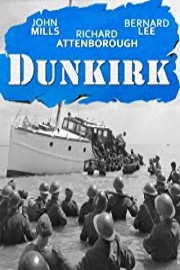
Dunkirk is an iconic war film directed by Leslie Norman that sets itself apart by portraying the legendary evacuation of British troops from Dunkirk during World War II. Released in 1958, this black-and-white movie incorporates a fascinating mixture of historical accuracy and dramatic elements to create an immersive experience, portraying the realities of war that are often missing from cinematic hot takes. The stellar performances led by acclaimed actors John Mills and Richard Attenborough underscore the stern, severe realities of the war times and the human spirit’s resilience.
The film is divided into three interconnected factions detailing the proceedings on land, sea, and air. The movie opens with a striking introduction to the chaos unfolding in France. The British Expeditionary Force and French Army are drawn in a corner at Dunkirk, with the German force tightening the noose and calling the tune. The succinct structure of the film brings in various perspectives, each providing a unique insight into the horrendous conditions and heroic actions.
Actor John Mills is the cornerstone of the land segment. He depicts an ordinary soldier, Corporal "Tubby" Binns, who is caught in the unfortunate turn of events. Caught between the devil and the deep blue sea, he exhibits the grueling ground reality marked by horrifying warfare, deteriorating morale, and promises of an impending rescue. The character's journey epitomizes the unpredictability of life during wartimes when survival becomes the ultimate goal, laying bare the ordinary man's extraordinary courage.
Richard Attenborough magnificently plays John Holden in the sea portion. With Attenborough's character, the narration transitions from the mainland to the sea. Holden, initially a cynical journalist, shows a metamorphosis from a dubious figure to someone who's tenacious, willing to risk his life to participate in the unprecedented evacuation. The character symbolizes civilian courage and their extraordinary contribution to the war.
Norman embeds genuine footage from the war and the evacuation throughout the film, adding authenticity. The director spins a daunting narrative, immersing the viewer into the calamitous setting of the war and the impending danger lurking around, coupled with the nascent hope of a rescue mission.
The air part of the film features a small but an equally significant subplot of two RAF Spitfire pilots who provide air cover to the evacuation fleet and combat the German Luftwaffe with bravery and determination. These scenes, although brief, portray the unwavering spirit and valiant selflessness of fighter pilots, bringing to the fore their pivotal role in the strategic mission's success.
Dunkirk also pays homage to Operation Dynamo, the last-ditch evacuation effort by the British military and civilian vessels. The film beautifully captures the synchronized effort of both the military and the civilian population to rescue stranded soldiers from the beaches. The views of hundreds of boats crossing the English Channel to step into an active war-zone highlights the unity in the face of daunting adversity.
The film conveys the narrative with an engaging and realistic depiction of various struggles faced by the British forces and civilians during the evacuation. The screenplay overlays action, emotion, and elements of suspense that keep the viewer riveted till the end. Cinematography stands out with intense war scenes, powerful combat sequences, and authentic visuals of the evacuation that amplify the movie's impact.
The characters may not be magnificently singular, they represent the collective courage of a nation at war. There is no glorification or melodramatic interpretation of bravery; instead, ordinary individuals rise to the occasion, doing the extraordinary in the face of adversity.
Humanity, resilience, sacrifice and bravery are the key themes of Dunkirk. This film is an ode to collective strength, reminding viewers of the courage and selflessness that played a fundamental role in a moment that was not only significant for World War II but also a historic moment for Britain.
In conclusion, Dunkirk is a war film that goes beyond warfare to depict the human aspect, the spirit of resilience that permeates through adversity. The poignant performances of John Mills and Richard Attenborough, accompanied by an ensemble cast, paint a vivid picture of the hardships, the turmoil and the hope that embodied the Dunkirk evacuation, leaving an indelible impact on the viewer.
7.2/10