

City Slickers Can't Stay With Me: The Coach Bob Larsen Story
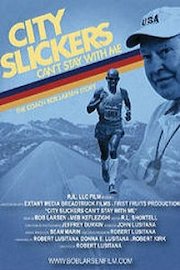
City Slickers Can't Stay With Me: The Coach Bob Larsen Story

Where to Watch City Slickers Can't Stay With Me: The Coach Bob Larsen Story

City Slickers Can't Stay With Me: The Coach Bob Larsen Story is a 2015 fascinating documentary that delves into the life of legendary running coach, Bob Larsen. Directed by Robert Lusitana, the film pays tribute to Larsen's unprecedented contribution to the world of long-distance running and highlights how he reshaped an entire segment of the sport. It features an array of interviews with Larsen himself, his former students, and even Olympic medalists like Meb Keflezighi.
Coach Bob Larsen has always been an enigma in the world of running—despite his huge contributions to the sport, his name is not a household one. This film shines a spotlight on this unsung hero and his coaching philosophies that brought a revolution in American distance running. But, most importantly, it affirms the human spirit embedded in running and how it transcends the simple act of physical motion.
The narrative opens a gateway into Larsen's early life, a boy from a Minnesota farming community, offering a retrospective timeline to his journey into the sphere of running and his influence on American distance coaching. We then follow Larsen's career trajectory, his embracing the unpredictable elements of cross-country running, and his subsequent emergence as one of the most influential coaches in the world of running.
Larsen’s unique and unconventional approach to training is amply displayed in the movie as he often took his runners to the San Diego's hills for high-mileage training. He was a staunch believer that the city slickers or regular urban runners couldn't stay with him—thus, giving the movie its name, City Slickers Can't Stay With Me.
At its heart, the film is a testament to Larsen’s coaching philosophy, which was to explore the relevance of training at altitude within the domain of American running. Larsen believed traditional training methods were inefficient. Hence he introduced the concept of 'high-low' training, where athletes would live and train for extended periods at high altitudes but frequently compete at sea level to optimize their performance.
An important focal point in the movie is Larsen's relationship with Meb Keflezighi, an American distance runner, who became an Olympic medalist and winner of the NYC and Boston marathons under Larsen's elite coaching. It paints a vivid portrait of the bond they shared, a relationship that brought two great individuals together, resulting in several running phenomena.
Keflezighi speaks with candor about Larsen’s guidance and how his innovative coaching techniques brought about a seismic shift in his understanding of sports and personal growth as an athlete, leading him to victories in seemingly impossible circumstances. Notably, the film also features Thom Hunt, a renowned track and field athlete, and Larsen's former student, providing insightful stories on Larsen's exceptional training methodologies.
The combination of impactful interviews, archival footage from past races, including Keflezighi's momentous New York City Marathon victory, and scenes from training camps, carve a compelling narrative about Larsen’s remarkable career and his enormous impact on the sport.
The storytelling, supplemented with astounding cinematography that captures the essence of running in various terrains, all underpinned by an evocative score, evokes a wide range of emotions, from awe-inspiring to heartwarming. Larsen’s strategies are broken down and explained in such a manner that even viewers unfamiliar with running would be able to grasp the groundbreaking techniques he employs and appreciate their effectiveness.
City Slickers Can't Stay With Me: The Coach Bob Larsen Story is not merely a sports documentary. It captures the undercurrents of determination, resilience, human spirit, camaraderie, and unwavering commitment that epitomize the pursuit of excellence in sports. It provides a window into the almost poetic relationship between a coach and an athlete and underscores the phenomenal accomplishment of an unsung hero of American distance running.
In conclusion, this film is a compelling watch for sports enthusiasts, especially those interested in the art of running and coaching, and serves as an impressive tribute to a giant in the realm of distance running. This documentary efficiently unravels the rich tapestry of a storied career, a motivational treatise on the pursuit of greatness, and an intimate portrayal of the tireless dedication of a true maestro.