

Chaos, Fractals and Dynamics: Computer Experiments in Mathematics
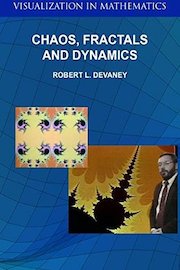
Chaos, Fractals and Dynamics: Computer Experiments in Mathematics

Where to Watch Chaos, Fractals and Dynamics: Computer Experiments in Mathematics

Chaos, Fractals and Dynamics: Computer Experiments in Mathematics is a visually stunning and intellectually stimulating documentary that delves into the captivating world of mathematics, exploring its profound connections to chaos theory, fractals, and dynamical systems. Starring the esteemed mathematician Robert L. Devaney, the film serves as both an educational resource and an artistic journey, demonstrating how mathematical concepts can transcend abstract theory and manifest into beautiful, intricate patterns and phenomena.
At its core, the film aims to bridge the gap between the abstract nature of mathematical ideas and their real-world applications. Devaney, a prominent figure in the field of mathematics, takes viewers on a fascinating journey through the history and evolution of chaos theory and fractals, illuminating the often-overlooked beauty and relevance of these topics. He possesses a unique ability to make complex mathematical concepts accessible and engaging, drawing upon years of research and teaching to communicate effectively with both students and the general public.
The film opens by introducing viewers to the fundamental principles of chaos theory—how small changes in initial conditions can lead to vastly different outcomes, often referred to as the "butterfly effect." This concept is brought to life through a series of computer-generated simulations and visual experiments that vividly illustrate the unpredictable and sometimes counterintuitive nature of chaotic systems. The visuals are not merely supplementary; they are an integral part of the narrative, showcasing stunning graphics that transform intricate mathematical equations into mesmerizing visual experiences.
As the journey progresses, the film delves deeper into the fascinating world of fractals, which are infinitely complex patterns that emerge from simple mathematical rules. Devaney explains how fractals can be found in nature, from the branching of trees to the structure of snowflakes and coastlines. These examples serve to highlight the idea that mathematics is not just an abstract discipline confined to classrooms but is deeply embedded in the fabric of the universe, governing the structures and patterns we observe around us.
One of the standout features of the film is its use of computer graphics to perform what Devaney refers to as "computer experiments." By leveraging technology, researchers can visualize and manipulate mathematical concepts in ways that were previously unimaginable. This addition of a digital dimension allows for a better understanding of complex systems, enabling both mathematicians and laypersons to grasp higher-dimensional dynamics that would be challenging to conceptualize without these tools. The film shows viewers how these experiments are designed, emphasizing the process of discovery inherent in mathematical research, where curiosity leads to unexpected insights.
Throughout the documentary, Devaney’s enthusiasm for mathematics is palpable. His engaging storytelling style, filled with anecdotes and historical context, makes the learning process an enjoyable one. The film pays homage to the mathematicians and scientists who have laid the groundwork for our understanding of chaos and fractals, celebrating their contributions and the collaborative nature of scientific inquiry.
In addition to the exploration of theoretical concepts, the film also touches on the impact of chaotic dynamics and fractals in various fields, including biology, economics, and physics. By illustrating the interdisciplinary nature of mathematics, Devaney encourages viewers to appreciate how mathematical frameworks can inform and enhance understanding across diverse domains. The implications of chaos theory, such as its application in predicting weather patterns or understanding stock market fluctuations, highlight the practical significance of these abstract ideas.
Moreover, the documentary serves as a visual feast, designed to captivate and engage its audience. The cinematography and computer graphics are artfully intertwined, creating an immersive experience reminiscent of an art exhibit steeped in mathematical beauty. The vibrant colors and intricate designs of fractals are not only breathtaking but also demonstrate the aesthetic allure of mathematics as a discipline that intertwines rigor with creativity.
As the film approaches its conclusion, it invites viewers to reflect on the broader philosophical questions surrounding the nature of mathematics—its role in understanding our world and the underlying order within chaos. Devaney is careful to leave audiences with a sense of wonderment, inspiring them to seek out knowledge and explore the powerful interplay between mathematical theory and the chaos of everyday life.
Chaos, Fractals and Dynamics: Computer Experiments in Mathematics ultimately serves as a poignant reminder that mathematics is not just a set of abstract concepts but a vibrant, living language capable of describing the world around us. Through Devaney’s compelling narrative and the mesmerizing visual journey, viewers come to appreciate the beauty, complexity, and universality of mathematical ideas, igniting a newfound passion for exploration in this fascinating field. The film is not only an educational tool but also an invitation to marvel at the intricate tapestry of reality woven through mathematical principles.