
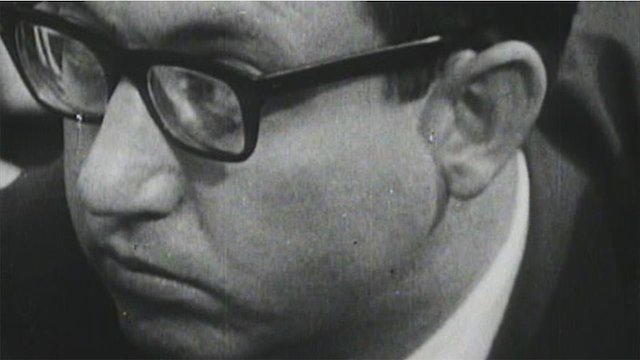
A Time for Burning
A Time for Burning
 7.7/10
Where to Watch A Time for Burning

A Time for Burning is a riveting 1967 documentary directed by Bill Jersey, produced by Quest Productions, and featuring personalities such as Ernie Chambers, Ray Christensen, and Bill Youngdahl. The film provides a raw and powerful insight into the civil rights movement, capturing the struggle for racial integration during the 1960s, an issue that ever remains relevant to this day.
At the heart of the documentary is the Augustana Lutheran Church in Omaha, Nebraska. The Church, serving a predominantly white congregation, grapples with the challenge of racism in the midst of a segregated society. The film primarily utilizes the cinema verite style of documentary filmmaking, letting the events unfold naturally on camera without the typical storytelling conventions of interviews, voiceovers, or staged reenactments. This approach legendarily captures the genuine emotions, uncomfortable conversations, and tensions running high within the Church and the community's broader socio-political landscape.
Ernie Chambers, who is not just a leading figure in the film but also in Omaha's black community, serves as a compelling character. He acts as an unfiltered voice for the black community, passionately articulating their frustrations and the racial injustices they face daily. Without mincing words, Chambers puts forth the African American community's perspective on racial issues, setting a considerable part of the film's tone.
An equally captivating personality in the film is Bill Youngdahl, the young pastor of the Augustana Lutheran Church, who attempts to integrate his all-white congregation with the neighboring black Lutheran church, which leads to significant resistance. Youngdahl is shown trying to initiate an exchange program with a neighboring, predominantly black church, providing a poignant look at the personal and professional sacrifices he makes in the name of progress and integration.
Last but not least, Ray Christensen, a church council member, comes across as a representation of the general public attitude towards the racial issues at the time. Christensen's reluctance and hesitation bring to light the subtle and overt manifestations of prejudice and discrimination embedded in society.
The film does a splendid job of focusing on these three central personalities and their differing views on racial issues, accurately demonstrating the complexities and hurdles that come with initiating change within a resistant society. It provides an intimate portrayal of the delicate dynamics of race relations, revealing the many layers and intricacies involved.
One particularly compelling aspect of the film is its inherent honesty. It does not sugarcoat the harsh realities of racism nor does it offer any easy answers or resolutions. It presents a raw, unfiltered view into the reality of racial tension and the struggle for equality, making it a pertinent watch, decades after its initial release.
A Time for Burning was highly acclaimed upon its release and continues to be widely recognized for its discourse on race relations, remaining relevant to contemporary audiences. Nominated for an Academy Award for Best Documentary Feature, it presents an insightful perspective on the civil rights movement and the societal rifts that pervaded American society in the 1960s.
The film's cinematography and directorial approach also deserve special mention, with its candid, unscripted style that captures the zeitgeist of the period. The conversations and arguments that unfold on camera deliver an authentic portrait of the time frame and the gravity of the issues at hand. A Time for Burning thus is an important historical document that, while rooted in a specific time and place, reveals universal truths about prejudice, courage, and the human capacity for change.
A Time for Burning is ultimately an intimate, revealing, and challenging piece of filmmaking that delves into the complexities of race relations in America, and is a must-watch for those interested in understanding the history of the civil rights movement and the continuing struggle for equality. It captures the essence of a defining era, providing viewers not just a history lesson, but resonating and encouraging insights into a fight that continues today.
7.7/10