
Flip the Frog

Where to Watch Flip the Frog

"Flip the Frog," an animated series created by Ub Iwerks, emerged during a time when the world of animation was experiencing significant innovations and character development. The series was produced by Iwerks' own studio, which he established after parting ways with Walt Disney, with whom he co-created the character Mickey Mouse. The frog protagonist made his debut in the early 1930s, amidst the era of black and white animation and the transition to synchronized sound in film. A notable figure in the animation industry, Iwerks was known for his creativity and technical prowess, characteristics that became the backbone of the Flip the Frog series.
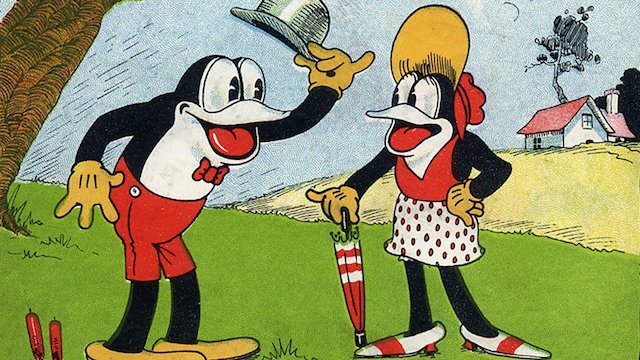
Flip the Frog as a character is an anthropomorphic amphibian with a cheerful and energetic persona, brimming with the whimsy and joy characteristic of early animated characters. The series features Flip engaging in various adventures and misadventures, whether it be navigating the urban landscape, dealing with other animals, or finding himself in fantastical situations that defy the mundane reality of the human world. In a way, Flip can be seen as a reflection of the everyman, albeit in a highly stylized and slapstick-heavy mode of storytelling.
The charm and appeal of Flip the Frog were fortified by the innovative animation techniques employed by Iwerks and his team. Ub Iwerks was, in fact, a pioneer in animation technology and storytelling, and his expertise is evident in the fluidity of the animation, the expressive character designs, and the clever use of sound that closely integrated with the visuals – a novelty at the time. Flip's world was richly conceived with elements of the surreal, which allowed for storylines filled with limitless possibilities and a creative playground where almost anything could happen.
Over the years, Flip the Frog starred in more than three dozen shorts – each one a self-contained story typically running from six to eight minutes long. The content ranged from comedic episodes to parodies of popular genres, like the Western or the horror movie, inviting a playful and often satirical take on contemporary cultural tropes. Some of these shorts were steeped in the zeitgeist of the 1930s, providing insights into the era's visual humor, societal norms, and the escapist entertainment sought by audiences during the Great Depression.
Although they were certainly products of their time, the Flip the Frog cartoons were not without their progressive elements. For instance, the series occasionally ventured into color animation, at a time when this was still a burgeoning artform. The series also explored narratives that seemed to break the fourth wall, showcasing a self-referential humor that acknowledged its own construct as a piece of animated art. Flip himself was quite the versatile character, shifting roles and professions with each episode, displaying attributes of resilience and adaptability in diverse and comical contexts.
Flip the Frog, like many animated characters of the era, also went through several design changes, reflecting both aesthetic preferences and technical developments in animation. Initially presented as a more realistic frog, over time Flip's appearance became more rounded and anthropomorphized, granting him a look that synchronized with the shift towards cuter and more relatable characters seen across the industry.
Despite the time that has passed since the series' original airing, Flip the Frog retains historical significance, not only for its place in animation history but also for its creative lineage. It afforded Ub Iwerks a platform to experiment with and refine animation techniques that would influence the field for decades to come. Iwerks was a visionary in the world of animation, and his time working on Flip the Frog functioned as both a testament to his previously unsung contributions to the medium and as a workshop where his ingenuity could flourish outside of the shadow of the Disney brand.
Although Flip the Frog didn't achieve the same level of eternal fame as some of his contemporaries, the series is still appreciated by animation enthusiasts and historians. The show stands as a relic of its time, offering a glimpse into the dynamism and evolution of early American animation. For modern audiences, watching Flip the Frog is akin to stepping into a time capsule, providing a unique perspective on the artistic and technological aspirations of the pioneering animators who laid the groundwork for the animated wonders that would follow in subsequent generations.
Flip the Frog is a series categorized as a new series. Spanning 1 seasons with a total of 1 episodes, the show debuted on 1930. The series has earned a no reviews from both critics and viewers. The IMDb score stands at undefined.