
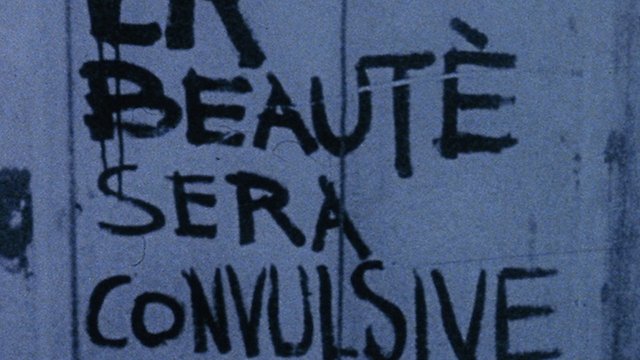
Un film comme les autres

Un film comme les autres
 5.5/10
Where to Watch Un film comme les autres

Un film comme les autres, which directly translates to "A Film Like Others," is a stimulating piece of cinematic craftsmanship directed by the profoundly acclaimed French-Swiss filmmaker Jean-Luc Godard in the year 1968. Positioned within the threshold of the political reconfiguration of the world, specifically the time of the massive general strike in France known as the Mai 68 or May 68 events, the film presents a dialectic twist on the traditional medium of cinema, infusing political thought and theoretical musings in a manner that is not featured commonly in mainstream film.
This experimental film uniquely combines snippets of political discussions engulfing France and globally at the time, with scenes of ordinary human life to develop a crucible of thought and emotion, reflecting the epoch's overlapping chaos and charisma. It is intellectually compelling, aesthetically challenging, and even as it emerges out of specific political events, the film resounds with a vibrant universal relevance.
Un film comme les autres does not conform to traditional filmmaking practices or narrative forms. In this film, Godard leverages the raw power of cinema to approach politics in an extraordinarily revolutionary way, keeping apace with the wave of change that stirred in the late 1960s.
The film mainly features non-actors — students and workers — discussing the societal and political issues of their time. The multitude of voices expound the dilemmas occupying the society of that era. Through vibrant and in-depth dialogues, the film examines the roots of social discontent, the conflict between idealism and reality, and the tumult of revolutionary fervor that washed over France and many parts of the world in the late 1960s. The conversations from the non-actors exude the fervent spirit of the age, not as a spectator but as a participant.
A crucial aspect of Un film comme les autres is its effective use of the French New Wave technique, which Godard championed, along with other filmmakers of his generation. This technique often included musical cues, unconventional storytelling, and disassociated dialogue, making the film viewing a fully immersive yet challenging experience.
In this film, Godard has effectively used this technique to elevate the viewpoints being presented, illustrating the raw intensity of ideas captured through the lens of the workers and students. He blends these elements with thе real-time responses of the passionate participants, thus creating a cinematic experience that bravely tests the boundaries of the viewer's understanding of societal norms, politics, and film as a medium.
Un film comme les autres often presents its dialogue as an oral symphony of ideas, every pause, every intonation adding to the symphony's grandeur. The film's visually sparse and dialogically dense space render an immersive canvas that draws and engrosses the audience into its world. The film consequently appears less like a script-bounded narrative and unfolds more as a profound discourse, unraveling life's complexity on screen.
Moreover, Un film comme les autres also showcases Godard's unique style of integrating audio-visual wit, wherein he fuses graphical manipulations and acoustic adventures to create an enchanting synergy. The film's audacious approach to the expected norms of filmmaking and its refusal to adhere to standard storytelling structure is also a testament to Godard's visionary artistry.
Finally, the exploration of the essence of revolution and its paradoxes, the stark conversational style, and the steadfast refusal to adopt a venerable storytelling approach give Un film comme les autres a sense of bravery that is rarely exhibited in mainstream cinema.
In conclusion, Un film comme les autres is an avant-garde masterpiece that serves as a stark reminder of the transformative power of cinema as an instrument of political, social, and cultural discourse. The film's raw intensity, intellectual vigor, and aesthetic daring make it an exemplary piece in understanding the correlation between film and revolution. It stands as a testament to Jean-Luc Godard's courage and creativity, marking a unique space in the world of cinema that will challenge, inspire, and astound generations of film enthusiasts.
5.5/10