
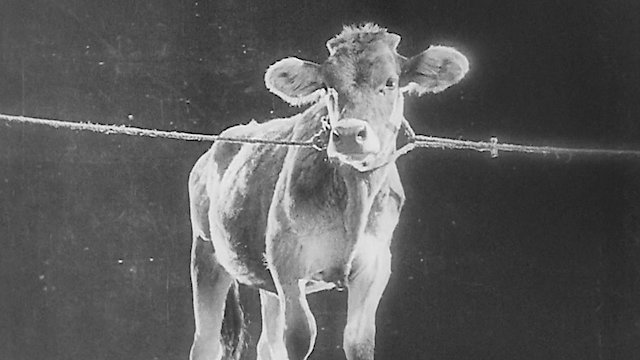
The General Line

Where to Watch The General Line

The General Line, alternatively known as Old and New, is an iconic Soviet silent film from 1929, directed by Sergei Eisenstein and Grigori Aleksandrov. The film features a talented ensemble cast, starring Marfa Lapkina in the role of Marfa, with M. Ivanin and Konstantin Vasilyev playing significant roles.
This film stands out for its deep symbolic exploration of the socio-political climate in Russia during the time. The General Line uses a narrative structure that is less conventional and staggeringly impressionistic. This daring decision showcases Eisenstein's groundbreaking cinematic vision, setting the course for future Soviet cinema.
The story is centered around Marfa, a farmer's wife in pre-revolutionary Russia, who becomes the poster child for collectivism in agriculture. Marfa Lapkina delivers an unforgettable performance, embodying the spirit of change and resilience in the face of crippling hardships.
She sees the potential benefits that could be delivered through innovative technology and collectivization, despite resistance from traditionalist segments of her community. Marfa aspires and strives to modernize her farm and those in her village, walking a line replete with struggles and impediments, mirroring the broader tribulations that Russia was undergoing in the real world.
The interactions between Marfa and other characters, such as the old-fashioned villagers and innovative agriculturalists, create a dynamic social tapestry. Here, M. Ivanin and Konstantin Vasilyev contribute invaluably to the plot development. By delivering the right blend of conflict, contrast, and camaraderie, the film underscores its thematic elements without losing hold of its narrative tension.
The General Line is rich in visual symbolism, with the teeming life of the Russian countryside vividly recorded. Through the extensive use of detailed, poignant sequences, the filmmakers interweave thematic depth and emotional resonance. The movie's variety of starkly contrasting vignettes skillfully balances tragedy and triumph, reflecting both the desires and realities of Soviet life.
Among the most notable scenes in The General Line is a sequence involving a cream separator—a tantalizingly symbolic bit of machinery that embodies the promise of industrial modernity. Here, Eisenstein showcases his knack for crafting gripping film analogies, using dichotomous imagery to encompass the essence of an entire socio-political epoch.
Another signature feature of The General Line is its portrayal of the stark disparity between wealthy landowners and impoverished peasants. In this portrayal, it paints a vivid picture of the societal inequalities that marked pre-revolutionary Russia, which was one of the central themes of Soviet cinema of the period.
The General Line draws heavily upon cinematic montage, one of Eisenstein's signature techniques. The interplay between scenes sews together a comprehensive view of pre- and post-revolution Russian society, using dynamic imagery to emphasize the palpable tension between old and new, traditional and modern.
The General Line is distinctive in that it diverges from the spectacle of war and revolution common in Soviet films of this period in favor of a quiet, agricultural setting. However, the raw emotional turmoil and sweeping societal change are no less palpatically woven into this meticulous tapestry of rural life.
In sum, The General Line, though set against the backdrop of the countryside, explores themes that had country-wide resonance and were part of a broader, global discourse. Coursing through its narrative thread are thought-provoking comments on individualism and collectivism, tradition and progress, affluence and scarcity, aspiration and realization. Despite being silent, the film speaks volumes. It is, therefore, a testament to the genius of Eisenstein as a path-breaking filmmaker and the novelty of Soviet cinema.
As a must-see for any film enthusiast, the General Line showcases a profound understanding of film as a medium for exploring complex societal transformations. It's not just a film; it's an experience, a thought-provoking journey that is sure to leave viewers reflecting on the eternally resonant themes it investigates. With its captivating cinematography, impassioned performances, and thematic depth, it is a classic piece of cinema that transcends its era.
The General Line is a Drama movie released in 1929. It has a runtime of 120 Critics and viewers have rated it moderate reviews, with an IMDb score of 7.2..
