
The Curse of Quon Gwon

Where to Watch The Curse of Quon Gwon

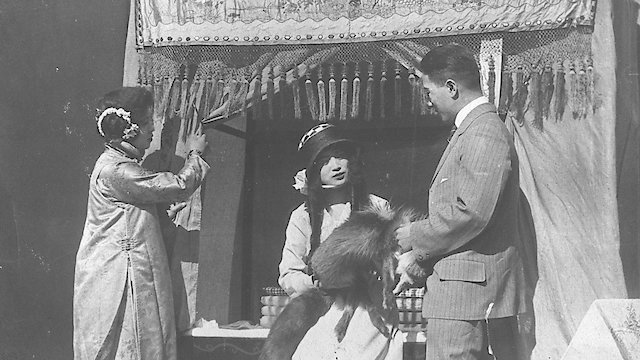
The Curse of Quon Gwon is a fascinating slice of cinema history, created in 1916 and directed by Marion E. Wong, who also starred in the film, marking her as one of the earliest female filmmakers in history. It features an all-Asian-American cast, which was an unheard-of feat during that deeply segregated era in the United States. The cast includes Violet Wong, Harvey Soo Hoo, and Marian E. Wong herself, offering a rich depiction of early Chinese American culture.
The film centers around the concept of East meeting West, as the ancient Chinese curse of Quon Gwon – translated as 'When the Far East Mingles with the West' – brings mystery and conflict to the characters' lives. Set against the backdrop of early 20th Century America, the film paints a vivid picture of the Chinese-American diaspora, their struggles, and their efforts to maintain their cultural heritage while assimilating into the new world.
The story unfolds as two Asian-American families grapple with their identity in a society that is foreign to their traditions and customs. At the narrative crux, the ancient Chinese curse, is a powerful symbol of the collision of Eastern and Western cultures, and the price paid for forsaking one's roots.
Violet Wong in the lead role brilliantly captures the dichotomy of a woman torn between her cultural values and the appeal of assimilation into the West. Her performance melds the strength and vulnerability of her character with a root cultural conflict that is as relevant today as it was over a hundred years ago. Violet's character's struggle symbolizes the internal dilemmas faced by many first-generation immigrants, rendered more poignant by the film being produced during a period of intense anti-Asian sentiment in America.
Harvey Soo Hoo is equally compelling in his role, portraying a man enveloped by the enigma of the curse, creating moments of tension and uncertainty. His character provides a striking contrast to Violet's character and adds more depth to the cultural clashes.
Marian E. Wong, apart from her directorial prowess, delivered a stellar performance. Her character becomes an embodiment of the bridge between two cultures, providing a much-needed perspective and breaking stereotypes around Asian women during that period.
Wong's direction is remarkable, particularly considering the obstacles she likely faced as a female director during a time where few women sat in the director’s chair. Her experimental approach to storytelling, combined with her undeniable talent to elegantly capture the visual aesthetics of life, enhances every frame of the movie. Wong’s framing of shots, use of lighting, and attention to detail help to craft a film that beautifully captures the texture of early twentieth-century Chinese-American life.
The Curse of Quon Gwon subtly weaves arduous subjects like cultural assimilation, racism, identity, and gender rights into its storyline. The characters' different approaches towards Westernization underscores the varying attitudes of American immigrant communities during that period.
Moreover, the film functions dually as a historical document, providing insights into Chinese-American culture during the early 20th century. It weaves in elements of Chinese opera, traditional dress, and the symbolism of Chinese architecture, enhancing the authentic portrayal of Chinese culture.
The Curse of Quon Gwon remains a standout piece of early independent filmmaking, a cultural document that provides an insightful peek into Chinese-American life during the early 20th century. Its exploration of identity, assimilation and culture clash in addition to its remarkable production history, continues to earn it well-deserved posthumous recognition as a significant work of American cinema.
The Curse of Quon Gwon is a Drama movie released in 1916. It has a runtime of 35 min. Critics and viewers have rated it moderate reviews, with an IMDb score of 5.5..
