
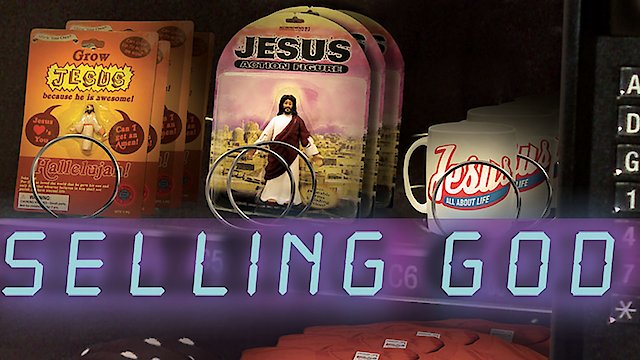
Selling God

Where to Watch Selling God

Selling God is a thought-provoking documentary film from 2009 featuring Bruce Gilman, Kirk Cameron, and Bill Colwell Jr. in compelling roles. The film offers an insightful examination of the way religion and, more specifically, Christianity, has been marketed and sold in the United States and worldwide. The film uses a wry, whimsical, and occasionally irreverent tone to approach this complex subject matter, aimed at facilitating a balanced yet critical understanding of the religious landscape in contemporary society.
The film's premise is intriguing as it paints the evolution of Christianity from its humble beginnings as a fringe sect some 2000 years ago to becoming a dominating religion in today's world. At its core, Selling God seeks to explore how the once modest practices of faith have mutated into a corporatized faith industry, raising provocative questions about the commodification of faith and the commercial exploitation of religious sentiments.
This provocative documentary is helmed by accomplished actor Bruce Gilman who brings to the screen a compelling mix of scholarly inquiry and insightful narration. Observed with a critical eye, the dynamics of Christianity's reach into the corners of modern life are laid bare, bringing forth a rich tapestry of perspectives that are sure to stimulate exploration and discussion.
On the journey through this complex discussion, the film introduces us to the famed actor Kirk Cameron. Cameron's endearing charisma as a born-again Christian helps reflect the influence of media in disseminating religious ideology, providing a compelling lens to view the nature of religious conversion and evangelism in the age of multimedia saturation. It’s interesting to see how the film leverages Cameron's public image as an evangelical Christian, highlighting the nexus between popular culture and faith.
Meanwhile, Bill Colwell Jr's strategic intervention in the film deepens the viewers' understanding of the inner workings of the religious media industry. Colwell's insights into the nature of the televangelism market underline a side of religion that rarely sees light - the tactics employed to maintain and expand the congregation, the strategic use of media, and the blend of showbiz tactics with religious overtures. All of which illustrates how packaged religion can be distributed to the masses.
In the process, the film does not shy away from showcasing how pop culture and technology have become significant tools in spreading religious doctrine. By intertwining elements of comedy and satire, Selling God manages to humane a subject that could have otherwise is overly somber, reflecting on the ironies and contradictions that abound in the faith market.
Through a variety of interviews and insights from scholars, preachers, believers, and skeptics, the film ventures into the heart of the religious industry. It examines topics like the birth of Christianity, fear-based religion, the rise of televangelism, and the saturation of Christian paraphernalia. The viewers are invited to question the blurred lines between faith, business, and entertainment, thereby offering religious critique without resorting to outright cynicism or disrespect.
While never losing its sharp wit and skeptical viewpoint, Selling God does go beyond a mere critique of Christianity. It encompasses an exploration into the functioning of other world religions as well. Ultimately, it is left up to the viewer to draw their conclusions about the extent of truth behind the concepts laid out in the film.
What makes Selling God stand out is it's the balanced portrayal of the subject matter. Although it critically examines the underlying issues, it doesn't fall into the trap of becoming a platform for atheistic propaganda nor does it strive to dissuade viewers from their beliefs.
Instead, Selling God focuses more on presenting an intriguing narrative about how faith is sold, packaged, and consumed in the modern world. Its approach is not about attacking any particular belief but rather emphasizes the importance of questioning what we believe and why we believe it.
In conclusion, Selling God is an honest, engaging, and sometimes humorous exploration into the business of religion. With a keen eye on the blurry boundaries between faith and consumerism, the film is a fascinating examination of how beliefs are branded and sold to a faith-hungry populace. This is a must-watch for those seeking a thoughtful discourse on the philosophy of religion in a consumer-driven society. Whether you are a believer, an agnostic, or an atheist, Selling God promises to make you think, question, and perhaps see the world of faith from a whole new perspective.
Selling God is a Documentary movie released in 2009. It has a runtime of 85 min. Critics and viewers have rated it moderate reviews, with an IMDb score of 6.6..
How to Watch Selling God
Where can I stream Selling God movie online? Selling God is available to watch and stream, buy on demand, download at Prime Video, Amazon, Amazon, Fandango at Home. Some platforms allow you to rent Selling God for a limited time or purchase the movie for downloading.
