

Scrooge 1935 Black and White Version
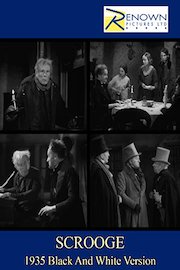
Scrooge 1935 Black and White Version

Where to Watch Scrooge 1935 Black and White Version

Set in the mid-nineteenth century London, Scrooge, the 1935 black and white version, is a remarkable retelling of Charles Dickens' immortal story "A Christmas Carol” directed by Henry Edwards. The story primarily revolves around a bitter old man named Ebenezer Scrooge, who is played adeptly by Seymour Hicks, the then-renowned British actor.
Scrooge's character is the personification of meanness, loneliness, and a lack of humanity. As a wealthy loner, his life revolves around his counting-house, money lending, and little else. His heart harbors no compassion for his fellow men, even during the festive season of Christmas. Everyone in London, from his poor clerk Bob Cratchit (played by Donald Calthrop) to his own nephew Fred (played by Robert Cochran), is afraid yet loathes him for his notorious miserliness and ill-nature. The aversion and fear that his character generates are living testimonials to Hicks' extraordinary acting reign.
The story takes a dramatic turn on Christmas Eve when Scrooge is visited by the ghost of his business partner, Jacob Marley (played by Claude Rains), who passed seven years ago. The depiction of Marley is both terrifying and pitiable as his ethereal form is burdened with heavy chains, symbolizing the weight of the sins he had committed during his lifetime.
The supernatural encounter prompts a journey deep into Scrooge’s bitter mind, heart, and soul, led by three ghosts: Past, Present, and Future. The spirit of Christmas past (Marie Ney) helps Scrooge travel back to his early days. Those innocent days highlight the emotional and humane side of young Scrooge, before his love for gold blankets his humanity. The spirit of Christmas present (Oscar Asche) opens up visuals of merry London celebrating Christmas sans Scrooge, most notably the Cratchit family amongst whom Tiny Tim emerges as an empathetic character. The spirit of Christmas future (Garry Marsh) escorts him to a possible dark, lonely future.
Throughout these spiritual journey stages, the film evolves from a mere period drama to an emotionally charged ethical journey, seamlessly blending scenes from Scrooge's past, present, and future. The transitions are finely depicted with haunting imagery and a spectral atmosphere that significantly contributes to the storyline's eeriness.
The character of Scrooge spirals towards redemption, and the transformation gradual and dramatic. Hicks' seasoned acting adds depth to these transitions making Scrooge's character extraordinarily real and relatable, despite his initial cold-hearted disposition. Furthermore, his experience of playing Scrooge in the 1913 silent version of the Dickens story lends more credibility to his onscreen representation.
Seymour Hicks' masterful portrayal of Scrooge garnered critical acclaim, establishing him as one of the quintessential representatives of the iconic character in cinematic history. Donald Calthrop, as Bob Cratchit, adds considerable color to the narrative. His portrayal of the underprivileged, overworked, and underpaid clerk who still finds happiness in little things is sheer brilliance. The rest of the cast, including Robert Cochran as Fred and Mary Glynne as Belle, Scrooge's former fiancé, enrich the plot with their performances.
The 1935 black and white version of Scrooge is steeped deep in the ethos of the Victorian era. It features impressive and authentic sets that bring to life Dickens's London, complete with its grimy streets, ancient buildings, and dimly lit by gaslight. The period detailing in costumes and props provide a deep sense of the times and lifestyle, greatly enhancing the story's enchantment.
This classic film is not just a portrayal of a story; rather, it is an impactfully resonant moral allegory emphasizing the need for compassion, generosity, and the spirit of sharing, particularly during the festive season. Besides the deeply etched characterisation and profound narrative, the inherent message of love and humanity wins viewers' hearts, making it resonate well beyond the realms of its run time.
Scrooge, the 1935 black and white version, ended up as a cinematic spectacle, a timeless classic that has continued to resonate with audiences even to this day. It is renowned for being one of the most authentic and compelling adaptations of Dickens' tale. It is a must-watch for those who love cinema that combines a gripping narrative with superb performances and profound undertones about life and its true value.