
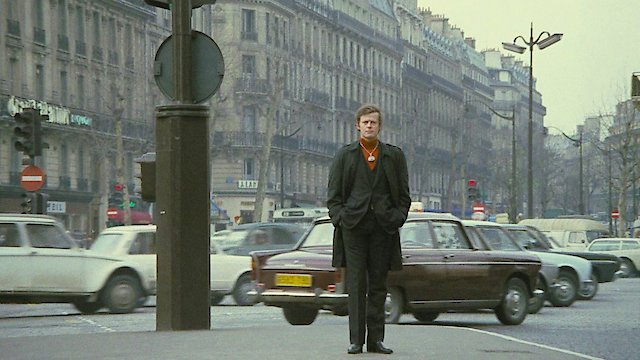
Rohmer in Paris
Rohmer in Paris
 7.0/10
Where to Watch Rohmer in Paris

Rohmer in Paris is an innovative, thought-provoking 2013 documentary directed by Richard Misek. This film beautifully intertwines the worlds of cinema, travel, and art narrative, appealing to movie buffs, globetrotters, and culture enthusiasts alike. The cinematic love letter pays tribute to the legendary French New Wave filmmaker Eric Rohmer, exploring the relationship between the esteemed auteur and the city he passionately loved and featured prominently in many of his films - Paris.
The film blends elements of documentary and essay film genres, providing a rich, multi-layered viewing experience. Borrowing from Rohmer's distinct style, Misek devotes attention to seemingly ordinary places, objects, and seemingly banal moments, offering up visual poetry and an authentic sense of place. Like Rohmer, Misek leads the audience to appreciate the ordinary as a kind of extraordinary, revealing the hidden charm and complex layers the everyday Parisian life.
While it might be considered a tribute to Rohmer, Misek also uses Rohmer’s Parisian films as a visually rich framework for his discourse. This 67-minute film is divided into eight chapters, each thoroughly investigating various aspects of Rohmer's intricate cinematic universe. The journey takes viewers through the idyllic parks, bustling cafes, timeless architecture, and ever-humming streets of Paris within the realm of Rohmer's narrative universe.
Richard Misek's unique approach entails using fragments from Rohmer's works, mingled with his original footage and photography. He pulls sequences from 15 of Rohmer's films and combines them with his footage of contemporary Paris. This juxtaposition of Rohmer's films against the modern cityscape creates an intriguing contrast between the Paris of Rohmer's time and the present-day city, and offers insights into how Paris, as a city, has evolved over time.
Despite the focus on Rohmer's work, the film operates on a personal level as well. Misek himself often becomes a character in the film, sharing his experiences, thoughts, and analysis of Rohmer's films and the peculiarity of his love for the city. He even includes his failed attempts at locating exact filming locations, adding a touch of humor and relatability. These personal touches and the narrator's voice serve to guide the viewer through this virtual tour of Paris, making the journey both educational and entertaining.
The film takes advantage of modern digital technology to offer fascinating ways of engaging with film history. Misek employs high-quality restoration and color grading to Rohmer's film clips. Moreover, he integrates Google Street View images and color manipulated shots to visually map the journey across the city. These techniques lend a modern feel to the film, presenting the past in a strikingly contemporary light.
While Rohmer in Paris is evidently a film about Eric Rohmer and his body of work, it's equally a film about the evolution of Paris, the craft of filmmaking, and the art of seeing the world around us. As Misek wanders through Paris in Rohmer's cinematic footsteps, a meta-narrative is constructed that chronicles not only the development of a city but also the viewer's own evolving relationship with film and place.
Rohmer in Paris is well-suited to those interested in film studies, art history, or French culture. But it resonates even with those who are unfamiliar with Rohmer's oeuvre. The film brilliantly showcases the dichotomy between the old and the modern, past and present, fiction and reality, and makes viewers perceive Paris in a completely different light. Beyond being a cinephile's delight, it is also a reflection on the nature of art, the complexity of cities, and the profound ways in which films can shape our understanding of the world.
In a nutshell, Rohmer in Paris is a multilayered artwork that beautifully bring together the worlds of travelogue, visual essay, and loving film tribute. This thoughtfully crafted film is as much an ode to Rohmer’s work, as it is an exploration of the power places hold in our memory and imagination. Balancing personal perspective with a broad visual analysis, Misek successfully invites the viewer into an intriguing cinematic journey, making it more than just a film – it's a novel experience. If you have a love for film, an interest in the French New Wave, or just enjoy viewing a city through someone else’s unique perspective, Rohmer in Paris is a must-see.
7.0/10