

Return of the Scorcher
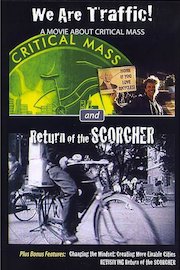
Return of the Scorcher
 8.8/10
Where to Watch Return of the Scorcher

Return of the Scorcher (1992), directed by Ted White, is a compellingly insightful documentary film that delves into the rich history and resurgence of bicycle culture globally. It's a mosaic of narratives, interviews, archival footages, visuals, and anecdotes, painting a vivid picture of the social and environmental implications of cycling and transportation modes–an urgent discourse in the world wrestling with climate change issues.
The title "Return of the Scorcher" derives from the 19th century term "scorcher," which referred to fast, reckless cyclists, often seen as a public nuisance in the late 1800s and early 1900s. The film is a metaphorical exploration, indicative of the cycle of life; while scorchers were once seen negatively, the renaissance of bicycle culture worldwide is seen as a symbol of freedom, health, and environmental preservation.
White transverses different countries, exploring the pulse and nuances of the bicycle culture. He begins in China, a country once known as the "kingdom of bicycles," a title that faded with the influx of car culture. The film captures the gradual shift from bicycles to cars, underscoring the transition's implications on a societal level. Amidst the colorful traffic chaos, the director contrasts the calmness and simplicity of the bicycle-based lifestyle with the aspirational symbol of cars encapsulating the global east-meets-west scenario.
The film then whisks us off to Amsterdam, the Netherlands - a city known to advocate strongly for creating a bike-friendly environment. Through the interviews with locals, the bicycle is presented not just as a means of transport but as a lifestyle, a philosophy brimming with ecologically sustainability and human connection.
In San Francisco, arguably one of the world's steepest cities and the birthplace of Critical Mass, Return of the Scorcher captures the legal and cultural battles that cyclists have engaged in their push for road rights. The phenomenal biking movement, Critical Mass, that began in San Francisco in the early 90s and later spread globally, is explored in an exciting narrative, showcasing a surge in the effort to make cities more amenable to cyclists.
"Return of the Scorcher" not only stirs a conversation about cycling as a mode of transport but also weaves in the idea of cycling as a community-building activity. The film presents the bicycle as an equalizing tool, shattering socio-economic distinctions and promoting community bonding. It embraces the quiet revolution of pedal power as a way to combat escalating traffic congestion and pollution, thus pointing to the role of urban planning, infrastructure, and societal attitudes.
The movie is filled with an array of candid interviews from bike enthusiasts, environmentalists, bicycle makers, to city planners and pedestrian advocates. Their passion, knowledge, and insights not only follow the past, present, and potential future of bicycling but also firmly anchor the film's purpose and message.
White's film is an invitation and challenge to modern societies to rethink their relationship with mobility, environment, and community. Using the bike as a symbol, he touches on themes of consumerism, city planning, social equity, environmental consciousness, and sustainable living. It’s a timely and timeless film that celebrates not only a method of transportation but the joy of simplicity, human connection, and ecological harmony.
"Return of the Scorcher" envelops viewers with a strange nostalgia and melancholy for simpler times before acknowledging the dawn of a new age where the humble bicycle is once again at the forefront of sustainable living strategies. Its strength lies in the smooth blend of historical context, contemporary challenges, archival footages, and moving human stories, making it effective as both a societal and environmental commentary.
The movie doesn't shy away from also highlighting the struggles and scepticism that the biking community continually faces, painting a balanced view of the situation. It goes beyond being a documentary on cycling, becoming a relatively comprehensive look at society, urbanisation, lifestyles, environmental issues, and global unity, using the bicycle as its central reference point.
In conclusion, Ted White's "Return of the Scorcher" can be seen as a stirring love letter to bicycles, which aptly weaves cycling's cultural and historical context with a persistent, endearing melody of environmental responsibility and sustainability. It is a must-watch for cycling enthusiasts, city planners, environmentalists, history buffs, and anyone concerned about sustainable living and the future of our cities.
8.8/10