
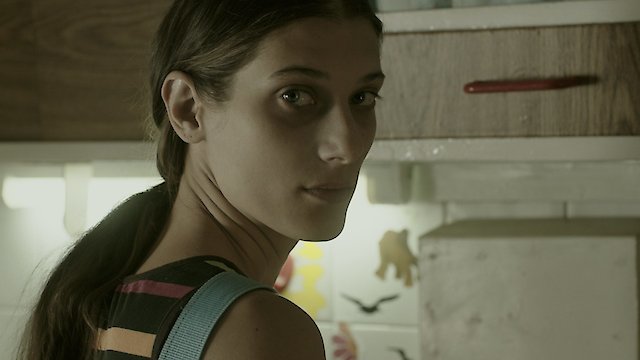
Quit Staring at My Plate

Quit Staring at My Plate
 6.8/10
Where to Watch Quit Staring at My Plate

Quit Staring at My Plate is a 2016 Croatian film helmed by first-time director Hana Jušić. The film stars the talented Mia Petricevic, focused on the central role of Marijana, and divergent personalities Niksa Butijer, portraying her domineering father, and Arijana Culina, playing her gentle, overshadowed mother. Capturing the complexities of life in a claustrophobic family set against the backdrop of a quiet seaside town in Croatia, the film narrates a tale of growth, responsibility, and self-discovery. It's essentially an intimate examination of life, relationships, and the challenges that come with it.
From the very onset, the somber and low-key tone of the movie is established, as we delve into the realm of the enigmatic protagonist, Marijana. As a hardworking lab technician, Petricevic showcases an excellent portrayal of her character, a woman in her late twenties whose existent life takes an abrupt turn when her controlling father suffers a stroke. Thrown into a whirlwind of new-found responsibilities, Marijana is left to negotiate the sprawling demands of family care and financial instability. Through the progression of events, the tale unfolds, subtly showcasing Marijana's evolution against the strains of her life.
Niksa Butijer as the dictatorial and oppressive father is spot-on in his performance. His character operates as the metaphorical 'plate' that everyone seems to be gazing at, reflecting the famil's woes and darker undercurrents. After his fall due to a stroke, the 'Plate' becomes even more significant, as his unforeseen illness brings forth more tensions and mundane struggles into the family forefront.
The character of Marijana's mother, played by Arijana Culina, deserves a special mention. Portrayed as a passive observer initially, she subtly represents the helpless and subjected yet resilient women who bear the brunt of patriarchal family structures. Culina beautifully embodies her character's quiet, timid demeanor, which contrasts well with Marijana's gradually assertive personality as the story progresses.
Quit Staring at My Plate navigates through the intricacies of human relationships, somewhat focusing upon the sister-brother bond between Marijana and her younger brother. The nuanced detailing of their relationship provides another dimension to Marijana’s character and the whole storyline.
The narrative of the film also casts light on gender politics, subtly showing the predicament of women in a traditional society. As Marijana takes up the family's responsibility, her desires and aspirations come to the forefront. This is where the director brilliantly explores the complexities encompassed in the character’s efforts to carve out an independent identity for herself. It drives home the narrative that it's perfectly alright for women to seek their dreams and assert their individuality.
The director uses beautiful and measured visual storytelling to enhance the narrative's impact. The cinematographer Jana Plecas's eye-catching frames capture the distressing as well as heart-warming moments in the narrative with equal sincerity. The film's aesthetic is further enriched by the minimalistic approach to the color palette, which aids in maintaining the somber, realistic atmosphere. These techniques, combined with the stellar performances, successfully render an almost voyeuristic quality to the film.
Carving a niche in European cinema, Quit Staring at My Plate has been celebrated at numerous film festivals. The film is more than a domestic drama or psychological analysis of its characters. It broaches fundamental questions about personal space, self-esteem, and finding one's identity amidst the pressures of traditional society. At the same time, it shows how effectively subtle humor can blend with intense drama to enrich the narrative.
Overall, Quit Staring at My Plate is a captivating journey that skillfully intertwines intense family saga with societal commentary. It's a universal story that resonates with everyone, making the ordinary people’s everyday struggles look extraordinary through its exceptional storytelling and craft. It conveys a powerful message about the strength of the human spirit in overcoming adversities, thus making it a must-watch in the world of contemporary cinema.
6.8/10