
Queer China, 'Comrade' China
Queer China, 'Comrade' China
 6.4/10
Where to Watch Queer China, 'Comrade' China

Queer China, 'Comrade' China (Zhi Tong Zhi) is an influential, eye-opening, and gripping documentary from 2009 that stands as integral viewing for not only fans of documentaries but also for anyone seeking to comprehend the evolving attitudes and societal norms toward the LGBTQ+ community in mainland China, encompassing a variety of personal and political perspectives to explore a complex and historically fraught subject.
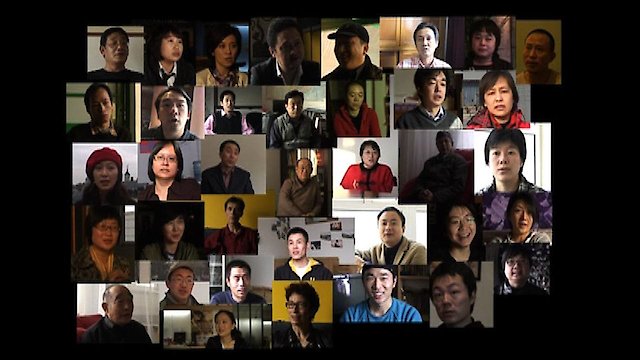
The film, directed by Cui Zi'en, a prominent Chinese scholar and gay-rights activist, skillfully frames an extensive and profound exploration of the past 90 years of LGBTQ+ history in China. Notably, the film achieves this daunting feat through interviews with fourteen of China's leading scholars, activists, artists, and writers - all of whom are instrumental in the independent queer movement. The film does not shy away from covering a broad spectrum of topics, including literary references to homosexuality in early 20th Century China, government-led crackdowns during the late 1980s and early 1990s, the China's first-ever organized LGBTQ+ event in 2005 to the impact of the internet in mobilizing the queer community and advocacy for gay rights.
In its essence, Queer China, 'Comrade' China engages in an intricate examination of China's relationship with homosexuality, a relationship that has fluctuated and evolved significantly. The film features a series of personal stories and accounts, documenting the struggles and triumphs of several LGBTQ+ individuals, which provides a humanizing touch to these larger societal and cultural shifts.
One of the significant points made in the film is the transformation of the symbol 'comrade,' or ‘tongzhi’ in Chinese. Initially a term used by the Communist Party to address party members, its meaning evolved throughout the eighties to its current use as a common term for homosexuality. This shift, as the film illustrates, demonstrates the ever-changing cultural landscape and language evolution in China's society, also shedding light on resistive activities on the political and community level against homophobic traditions and norms.
Furthermore, the film captures the impassioned battles for LGBTQ+ rights, the deeply entrenched societal stigmas, and the triumphs and setbacks encountered along the way. It puts a spotlight on the global Dynamics of sexual identity, culture, and politics, utilizing China's example to navigate broader conversations about sexual identity, human rights, and the global influence of Western LGBTQ+ movements.
The visual style of the documentary is minimalistic and straightforward, relying heavily on interview footage. It's in these one-on-one interactions that the film pulses with a sense of urgency and determination. These testimonials, which are often heartbreaking and inspirational in equal measure, are interspersed with historical images, video footage, and newspaper clippings, enabling viewers to see the changes in Chinese society over time.
Far from being a simple chronological history of homosexual life in China, Cui's film is a complex, multilayered examination of diverse experiences within China's queer community. It boldly threads a common narrative through unflinchingly intimate and highly personal accounts, expert commentaries, and tastefully arranged archival materials, bringing to life the transformations and continuities in China's acceptance and resistance to queerness.
Despite its modest production values, Queer China, 'Comrade' China is a remarkable achievement. It is a study of resilience, giving voice to marginalized stories while breaking down barriers of intolerance, ignorance, and bigotry. It is a tribute to those who dared to live authentically in a society that often dismissed, misunderstood, or shunned them.
Simply put, Queer China, 'Comrade' China is a visually compelling, emotionally resonant, and intellectually stimulating film. It is a deep-dive into the complex, ever-evolving intersection of culture, identity, and human rights in China. It is at once a sensitive portrayal of personal stories, a defiant archive of LGBTQ+ resistance, and an intellectual exploration of the evolving socio-political attitudes towards homosexuality. Though solidly grounded in Chinese culture and history, its themes are universally resonant, offering an empathetic, insightful perspective on what it means to be queer in a changing world.
6.4/10