

President Mir Qanbar
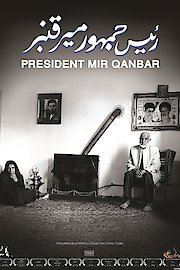
President Mir Qanbar
 7.1/10
Where to Watch President Mir Qanbar

President Mir Qanbar is an Iranian 2005 documentary film directed by acclaimed master of cinema, Mohammad Shirvani. It presents an authentic and endearing probe into Iranian society and its political system as it closely follows the fortunes of an unlikely presidential candidate, Mir Qanbar.
Mir Qanbar, the eponymous hero of the film, is a retired bureaucrat in his 70s who aims to contest for the presidency of Iran. He is a man with simplicity at his core, living a quaint and unassuming life in an isolated village in Iran. With his weathered face, honest demeanour and earnest determination, he wins the viewer's affection right from the onset.
Despite his lack of political acumen and absence of conventional smarts, Mir Qanbar's zest to work towards the betterment of his countrymen remains untainted throughout. This film captures his long standing dream to run for the office of the president of Iran and to change the conditions of his society through civic participation.
Mir Qanbar's ambitions are high, but his resources are limited. Armed with only his honesty and determination, he embarks on a brave journey to campaign in his far-flung rural community. Despite having no platform, lame slogans, and no particular political ideology, his sincerity towards the well-being of the country and its citizens is distinct and unwavering.
The film follows Mir Qanbar as he journeys on horseback and foot to visit his fellow villagers, deliver passionate speeches and distribute handmade campaign leaflets. Amidst a picturesque landscape, the contrast between his humble existence and grand political ambitions is beautifully captured by the cinematography.
It's within this interaction with his environment and neighbours that the film gathers its heart. It manages to capture the voice of the marginalized, unheard electorate who are as desirous of change as the rest of the urban populace, but have less access to the means of achieving it.
The film also focuses on a particularly endearing relationship between Mir Qanbar and his loyal donkey, who serves as his primary mode of transportation, his companion in the lonely campaign trail, and symbolic of his political journey. The bond between them is filled with warmth, affection, and is emblematic of Mir Qanbar's humility and connection to his roots.
The director, Mohammad Shirvani, employs an observational style of filming to authentically capture the nuances of rural Iran. With minimal interference, he perfectly captures the essence of Mir Qanbar's everyday life, his dreams, and his quest. The execution of the film is both respectful and insightful. It humanizes its subject, giving us a glimpse of the reality behind political ambitions.
Despite its serious subject, President Mir Qanbar is sprinkled with moments of unexpected comedy. These arise from the protagonist's sincere yet naïve conduct, his unusual campaign tactics and his interactions with sometimes baffled, sometimes amused villagers. These moments of levity provide the film with balance, juxtaposing rural simplicity against political complexities.
It's worth noting that it's not a propaganda piece, nor a mockery of its subject. The film doesn't traffic in cheap cynicism or political commentary, but instead offers an exploration of humanity, dream-chasing, and what it means to strive for change against insurmountable odds.
The film simultaneously functions as an anthropological study presenting a slice of Iranian life rarely represented in other cinema. Through Mir Qanbar's journey, the audience is able to connect with the hopes and dreams of a segment of society that are often overlooked.
In conclusion, President Mir Qanbar is a film that transcends geographical boundaries and political ideologies, and connects with the viewer on a humanistic level. It offers a striking, honest and ultimately touching portraiture of a humble man with monumental dreams. This is not just a film about an election, but an exploration into the grassroots of Iranian society, the rural landscapes and the human spirit of resilience and optimism. It’s a beautiful film - one that manages to be politically savvy, deeply humane, and highly engaging.
7.1/10