
People's Park
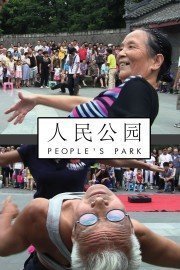
People's Park
 5.5/10
Where to Watch People's Park

People's Park is a fascinating non-narrative documentary from 2012 that provides the audience with a unique, immersive, and contemplative tour into the leisure and life of modern-day Chengdu, China. Directed by the acclaimed tandem of filmmakers, J.P. Sniadecki and Libbie D. Cohn, the film paints a vibrant picture of Chinese urban life and reframes western perspectives on Chinese society through an innovative single-shot technique.
People's Park is particularly notable for its unique fusion of filmmaking techniques, which primarily centers around a single, unbroken 78-minute shot. The film was shot with a high-speed Steadicam, providing a continuous and uninterrupted vantage point that allows the audience a fly-on-the-wall perspective to observe an uninterrupted stream of candid moments in the park. It presents an unfiltered view into the dynamics, lifestyle, and culture in Chengdu's titular People's Park.
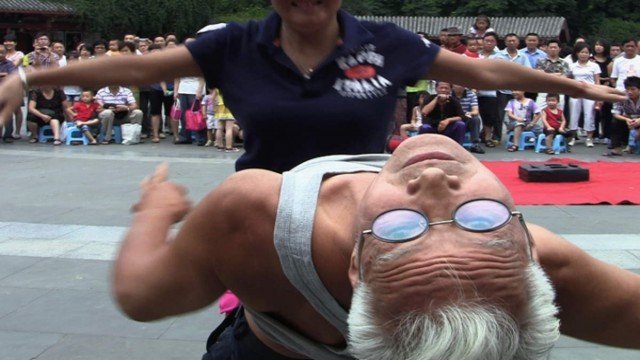
The park, as represented in the film, is a hotbed of diverse activity, featuring a myriad of parks-goers involved in various pursuits. Viewers are granted an intimate tour of the park, swooping through lively scenes of everyday activities. From tai chi practitioners to dancing couples, musicians to picnickers, lovers to loners, the camera glides smoothly through the hustle and bustle, capturing the heart and spirit of the locale.
Throughout the film, it becomes evident that the park serves as more than just a recreational space. It's a social hub, an oasis where the community's pulse becomes palpable, and life unfolds in its most unassuming yet profound forms. It's a melting pot of the strata of Chinese society, where traditional and contemporary culture converge and coexist. The immersive view instigates an emotional cross-cultural connection, making viewers feel they're accompanying the filmmakers as unseen tourists in the park's rich tapestry of activities.
In People's Park, the diversity of Chinese society is on full display. It presents an interesting juxtaposition between the varied idiosyncrasies of the visitors and the ubiquity of the park experience across cultures. The camera devotes equal attention to each park visitor, whether they are engaged in a group dance, playing an instrument, indulging in a game of mahjong, napping, or simply watching others. These mundane yet sincere images underscore the universality of human experience, simultaneously narrowing the cultural gap and fostering empathy.
Through People's Park, the filmmakers not only captured the rich tapestry of everyday life in urban China, but they did so from an encompassing and intimate perspective that many viewers will rarely get the chance to experience. It offers a valuable glimpse into the characteristics of contemporary Chinese society that often go unreported in the international press. There's a distinct humanity in the presentation that transcends political, cultural, and geographic bounds.
The film deconstructs notions of spectacle. Rather than relying on large-scale dramatic sequences or sensationalist narratives, it finds beauty and meaning in the mundane and everyday. These moments are captured with extraordinary detail and honesty, resonating with a profound sense of realism and intimacy.
The directors' choice of a single-shot technique underscores the film's commitment to show life as it is, raw and unfiltered. Each scene is allowed to breathe on its own gradual pace, allowing viewers to observe, reflect, and engage in a strangely captivating slow cinema experience. The lack of overt narration and the continuous ebb and flow of scenes fosters a contemplative viewing experience that encourages viewers to draw their own interpretations about what they observe.
In terms of its auditory landscape, People's Park merges a concoction of diverse soundtracks into a collective symphony of urban life. From the ambient noise, personal conversations, sounds of nature, to traditional music, each contributes to the film's aural tapestry. The clever use of sound and silence adds another immersive dimension to the viewing experience, making the audience feel even more firmly planted within the park's setting.
In sum, People's Park is a subtle, yet powerful, documentary study of a public space's role in a community's life. It successfully redefines the boundaries of observational cinema by inviting audiences to participate indirectly in the unfolding reality, immersing them deep into the nuances of everyday life in Chengdu's People's Park. Its innovative narrative techniques provide a fresh and eye-opening depiction of China, birthing a transcendent and indelible cinematic experience.
5.5/10