
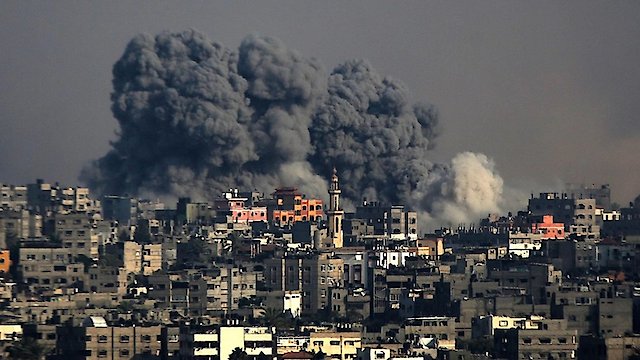
Peace, Propaganda & the Promised Land
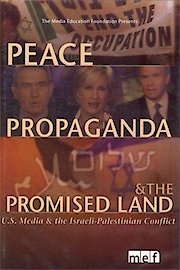
Peace, Propaganda & the Promised Land
 8.2/10
 57/100
Where to Watch Peace, Propaganda & the Promised Land

Peace, Propaganda & the Promised Land is a compelling 2004 documentary that delves into the complexities of the Israeli-Palestinian conflict and scrutinizes the manipulative use of media in controlling public opinion. The film features a diverse range of participants, each with their unique perspective on the subject, including media analysts Seth Ackerman, Stav Adivi, clergy members like Arik Ascherman, and political figures like Hanan Ashrawi.
Directed by Sut Jhally and Bathsheba Ratzkoff, the film methodically reflects upon the portrayal of the Middle East conflict by the news outlets in the United States and interrogates the information audiences receive, which often skews their understanding and emotional reactions. By analyzing why these variances occur, the directors illuminate how public perception risks being manipulated by powerful forces through mass media.
Seth Ackerman, media analyst and contributing writer for Fairness and Accuracy In Reporting (FAIR), lends his insightful perspective on the media's role in presenting this conflict. The film extensively interviews Ackerman, whose commentary attempts to separate facts from fiction and helps audiences better understand the insidious nature of media bias.
Stav Adivi, an Israeli peace activist who campaigns against the Israeli occupation of the West Bank and Gaza, also figures prominently in the film. Through Adivi's perspective, the filmmakers broaden the discussion, providing an alternative Israeli voice that challenges dominant narratives.
Rabbi Arik Ascherman, the executive director of Rabbis for Human Rights, also features in the documentary. Ascherman's statements reflect his deep dedication to resolving the Israeli-Palestinian conflict in line with the teachings of human rights and social justice as integral elements of Judaism.
Political figure Hanan Ashrawi, a noteworthy activist and one of the strongest voices articulating the Palestinian cause, provides essential insight into the Palestinian perspective. The film considers her commentary alongside those from other participants to create a fuller picture of the reality on the ground and debunk preconceived notions influenced by media bias.
Over the course of the film, the directors weave together these voices, presenting a comprehensive exploration of the media's role in shaping narratives. Amalgamating an array of interviews with scholars, journalists, activists, and religious figures, Jhally and Ratzkoff compile seemingly disparate threads to unveil their collective impact on influencing the public's perception about the Israeli-Palestinian conflict.
Notably, Peace, Propaganda & the Promised Land doesn't shy away from examining the mechanisms that control the flow of information in the media landscape and foster a certain narrative that favors the powerful, often obfuscating realities. Through its critical lens, it examines the representation of Palestinians, the fallacy of balanced reporting, and the prejudice that often plagues the news.
In essence, the central argument of the film is that mass media in the United States is often swayed by certain municipal and industrial forces to maintain a pro-Israeli bias, irrespective of the ground realities. This positioning underlines the crucial need for media literacy and transparency to counter propaganda, and to ultimately support a just resolution to the Israeli-Palestinian conflict.
What also makes this documentary a compelling watch is its commitment to the cinematic medium. It fluidly integrates a collection of archive footage, news clips, press conferences, and speeches within its narrative. This fusion of primary sources with the account provided by each participant enriches the viewer's understanding and stimulates critical inquiries about the media's role in crafting narratives about world events.
Peace, Propaganda & the Promised Land extends an invitation to the viewers to reassess their perceptions and the sources of their knowledge about the Israeli-Palestinian conflict. It challenges audiences to question the dominating narratives and to discern propaganda from reality. The film, thus, works to encourage viewers not only to consume media critically but also to demand more accountable reporting, fostering informed social discourse.
In conclusion, Peace, Propaganda & the Promised Land is not just a documentary about a region or a conflict. It's a critical commentary on media ethics, a quest for truth, and a clarion call for justice and peace. It is certainly an essential watch for those who want to understand the power dynamics underlying the Israeli-Palestinian conflict, the role of the media, and the impact of its narratives on public opinion.
8.2/1057/100