

Our Mockingbird
Our Mockingbird

Where to Watch Our Mockingbird

Our Mockingbird is a compelling and thought-provoking documentary that uses Harper Lee’s 1960 novel, "To Kill a Mockingbird," as a springboard to explore racial and cultural issues, as well as the power of education. Produced and directed by Sandra Jaffe, the feature-length film is a melting pot of literature, history, and social activism. It is at once an investigation of the past and a reflection on the contemporary society that poses important questions about race, identity, and empathy.
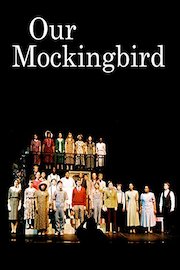
The setting of the documentary is in Birmingham, Alabama, one of the most racially charged cities in the United States with a history marred by the fight for Civil Rights. Here, an ambitious project is underway. Two high schools, one predominantly white and affluent (Mountain Brook High School), the other predominantly African-American and less affluent (Fairfield High School), come together to put on a joint theatrical production of Harper Lee's resonance 20th-century classic, "To Kill a Mockingbird."
Throughout the documentary, Jaffe uses clever storytelling techniques to bind the book's themes and historic perspectives on racism with this theatrical production and the students involved. The film follows their journey from the casting process through rehearsals to the final performance, revealing along the way the discoveries, friendships, and transformations that emerge from this shared artistic endeavor. It is a chronicle of the students' commitment and growing understanding of the subject matter, and how this unity in diversity ultimately serves to challenge racial stereotypes.
Our Mockingbird doesn't shy away from tackling painful historical truths. The film deftly interweaves interviews with scholars, activists, and civil rights attorneys to give context to the complex history of race relations in Birmingham and the broader American South. Such testimonies balance the personal and academic perspectives of a community trying to reconcile itself with its past.
The narrative layering is a significant part of the movie. The parallel between the plot of the novel and Birmingham's own struggle with segregation and racism provides a textural depth that makes the viewing experience deeply enriching. In the novel, the character of Atticus Finch serves as the moral compass, upholding justice in a racially divided fictional town. This mirror with real-life Birmingham becomes an effective tool for retrospection, dialogue, and potential resolution.
Our Mockingbird isn't just focused on the past; it draws direct lines to the present. Throughout the documentary, students analyze and discuss their interpretations of the story, bringing forth their insights. This vivid showcase of youthful perspectives imbues the film with an energy and immediacy that contrasts with the sobering reflections of the older participants.
The film also devotes considerable time to explore Harper Lee's biography, and the influence her upbringing in Monroeville, Alabama, had on her writing. As interviews unearth the reality of Lee's hometown during the early 20th century, viewers are allowed a peek into the inspiration behind setting, characters, and conflicts in "To Kill a Mockingbird."
Our Mockingbird ultimately emerges as a poignant reminder of the healing power of understanding and the transformative potential of education. It's an exploration of the way literature can serve as a catalyst for social dialogue, and how a novel written over half a century ago continues to be profoundly relevant in today's world.
Harper Lee wrote "To Kill a Mockingbird" as a means of making sense of the world around her. Similarly, Our Mockingbird uses this beloved classic as a framework to engage with race, identity, and justice, confronting forgotten histories and opening avenues for much-needed conversations. The film brilliantly presents the idea that in understanding our past, we can better navigate our present and shape our future.
Stylistically elegant and intellectually stimulating, Our Mockingbird is a treasure for fans of Harper Lee's novel and anyone interested in history, literature, and social justice. The documentary is a valuable tool that encourages viewers to establish connections – connections between past and present, between literature and life, between self and other – all through the lens of one of the most impactful novels in American literature.