
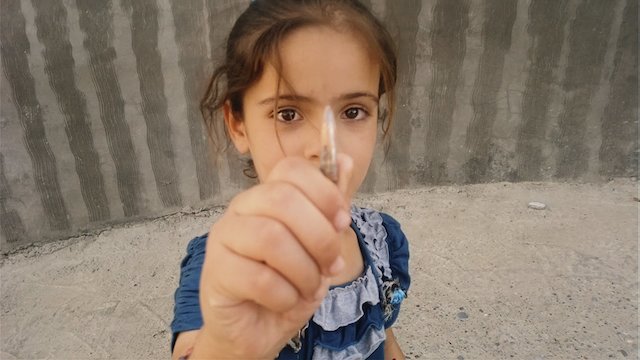
Nowhere To Hide
Nowhere To Hide
 7.8/10
 82/100
Where to Watch Nowhere To Hide

Nowhere To Hide is a riveting 2016 documentary directed by Zaradasht Ahmed, featuring the lives of ordinary citizens in war-torn Iraq, particularly focusing on a medic named Abu Fallah. Abu Fallah is a nurse by profession who serves as the film's eyes and ears, taking us along with him on his journey into the harsh realities of life in a conflict zone. The film also includes eminent personalities such as Hans Husum and Mudhafar, further intensifying the dialogues about war and its distressing effects on civilians.
The film unfolds over several years, casting light on the lead-up to and aftermath of the Iraq war and the crescendo of violence that continues to increase in the region. The storyline threads together gripping sequences of the chaos and disorder caused by the conflict, while simultaneously highlighting the incredible resilience and humanity exhibited by the Iraqi people. The title, Nowhere To Hide, captures the raw essence of the film text – underscoring the harsh reality faced by those either trapped or opted to remain in the heart of the conflict.
Abu Fallah takes centre stage as the protagonist, employing the “video diary” technique to document his life and experiences. The director, Zaradasht Ahmed, hands him a camera to emphasize the film's first-hand narrative quality. Through Fallah, we get an intimate picture of his life and his unflagging spirit, navigating his professional duties in treating people impacted by violent incidents, while also managing dueling roles of husband and father within his family.
Despite the sobering and often distressing situations portrayed in the movie, Fallah's tenacity and resilience stand out, gently reminding audiences of the unmistakable endurance and strength of the human spirit. This isn't a documentary that capitalizes on human suffering to evoke reactions. Instead, it strips away the concept of people as mere statistics in an ongoing war, reminding audiences about the real faces and lives affected by it, in turn pushing viewers towards empathy and better understanding of suffering amidst human conflict.
In the background, the portrayals of Hans Husum and Mudhafar lend additional depth to the narrative's complexity. Husum, a Norwegian war surgeon and an eminent personality in medical circles, elaborates on the broader, international perspective of the repercussions of conflict, particularly on the medical community. On the other hand, Mudhafar, another healthcare professional in Iraq, is seen interacting with Fallah in many instances, showing his involvement in essential relief work.
The camera work in Nowhere To Hide is deeply immersive, dissolving boundaries between observer and observed, establishing a captivating feeling of being right there amidst it all. Despite being shot under challenging conditions, the visuals don't lack refinement, maintaining authenticity and showcasing the brutal aftermath of violent incidents even in the depth of desolation; the focus remains on the human perspective of the ravages of war.
One of the remarkable facets of this documentary is that it doesn't lean on political assertions, nor does it strive to point fingers. Instead, it aims to shed light on the aftermath of war and the human cost often underestimated when discussing conflict—the lives displaced, the homes destroyed, the livelihoods lost, and the families torn apart.
In conclusion, Nowhere To Hide serves as a definitive documentary of life in modern-day Iraq, exhibiting in raw detail how people survive in one of the world’s most dangerous cities. It is a testament to the struggles of ordinary citizens as they grapple with the grim realities and chaos brought by a war that seems to have no end. Even amidst such hopelessness, the film effectively lightens the heart with the commendable resilience it portrays, underlining a compelling message that even amidst adversity, hope persists.
7.8/1082/100