
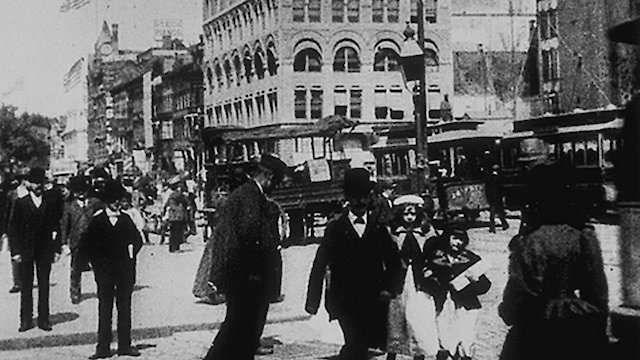
New York: Broadway at Union Square
New York: Broadway at Union Square
 5.6/10
Where to Watch New York: Broadway at Union Square

New York: Broadway at Union Square is one of the pioneering pieces of cinematography from the year 1896. The movie is a real treat for history buffs and cinema lovers alike. Although it is a short work of film, the richness in the framework doesn't make it any less enjoyable. Witnessing one of the earliest surviving motion pictures that vividly captures the fine details of a typical day at incomparable Union Square in New York City is nothing short of revelation.
This movie is indeed more than just consumers of entertainment, it is a significant historical document. Directed by the renowned William Heise and produced under the name of Thomas A. Edison, the importance of the figures behind this work is as significant as the production itself. The unprecedented quality of the motion picture for such early cinema, paired with the historical importance of the individuals responsible for this work, adds to the reason why this movie holds significance.
The setting and subject portray a bustling Broadway at Union Square. The story is simple but vivid: a live street scene from the heart of New York at the turn of the century, where horse-drawn carriages, peddlers, pedestrians, and the bubbling energy of life in the metropolis are seen. Viewers are immersed into what life was like then, giving them a unique insight into the dynamic culture and society of the late 19th-century America. The scene brims with life, and though it is only 39 seconds long, viewers feel as though they've stepped into another era.
A remarkable feature of this film is its authenticity. New York: Broadway at Union Square embraces a form of astonishing realism. Without any rehearsed actors, rehearsed scenes, or artificial set dressing, this film purely and unambiguously depicts a natural depiction of the popular Broadway. You see people engrossed in their everyday life, unaware they are being recorded for posterity, innocently adding to the authenticity of the film.
As the camera pans, it seems as though the audience is invited to take a leisurely stroll through time—observing the busy streets, burgeoning technology of the age in the form of trolleys and horse-drawn carriages, and the fashion sense of the people casually walking around. It carries a quality of being effortlessly candid—capturing mundane, everyday moments that collectively make city life what it is.
The true essence of the movie lies in its ability to encapsulate the spirit of New York City in its blooming stages, showcasing the hustle and bustle of the city that would soon transform into one of the most iconic cities worldwide. Since there was no sound recording technology available in that era, the silent film amplifies the visual storytelling, which leaves a significant impact on the viewer without uttering a single word.
What manners and fashions existed in that era are insightfully shown in the film's broad perspective. The dress code of men, women, and workmen, the kinds of transports, the look of the past Union Square in New York, are beautifully depicted all within its short span. Thus, New York: Broadway at Union Square gives viewers not only an accessible cinematic experience but also a chance to discover the treasures of a forgotten time.
Movie enthusiasts and casual viewers alike may find it hard to comprehend the rapid changes in culture and technology that have occurred since this film was first screened. From the black and white visuals to the length of the film, to the silence of the footage, everything signifies a leap in time, emphasizing the spirit of 19th-century New York and the birth of filmmaking itself.
In conclusion, New York: Broadway at Union Square from 1896 is a short but intriguing journey into the past. Its visual experience is indeed special, proving how effective and powerful silent cinema can be. This rare footage gives the viewer an intimate look into the daily life of New Yorkers at the end of the 19th century and can be considered as an exquisite open visual diary from the age when cinema was taking baby steps. It's just not a movie, it's a time machine that takes you back to the era long gone, yet beautifully preserved.
5.6/10