

Lockerbie: Case Closed
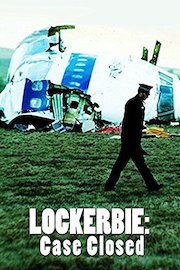
Lockerbie: Case Closed

Where to Watch Lockerbie: Case Closed

Lockerbie: Case Closed is a riveting documentary film that dives deep into one of the most controversial and tragic events in the aviation history – the bombing of Pan Am Flight 103 over the Scottish village of Lockerbie on December 21, 1988. This comprehensive and investigative documentary offers an examination of the tragic event, while providing an intriguing take on the aftermath, as it presents new evidences, interviews, and testimonies, whose spectral syntheses make up the larger context of the Lockerbie bombing event.
The film presents a meticulous narrative that intertwines criminal investigation records, witness testimonies, anecdotal comments, as well as re-enactments to draw a panoramic picture of the circumstances surrounding the incident. This heart-wrenching tragedy, which claimed the lives of 243 passengers, 16 crew members, and 11 residents on the ground in Lockerbie, has triggered tremendous shockwaves of grief and indignation across the globe – a historic event that the film manages to encapsulate in a thought-provoking and soul-touching manner.
The movie's narrative weaves around one particular individual, a Libyan intelligence officer by the name Abdelbaset al-Megrahi, who was charged with the crime. Prompting countless burning questions and controversies, the case pertaining to the Lockerbie Bombing, its proceedings, and its ramifications constitute the focal point around which the entire movie orbits. Viewers accompany the filmmakers in a meticulous exploration of the case, diving into the intricate complexities of the investigations. The film encapsulates the amalgamation of emotions associated with the event - loss, controversy and an unequivocal quest for truth and justice.
Being more than just a typical news bulletin or a sensationalized true crime story, Lockerbie: Case Closed goes beyond presenting mere facts. The documentary leverages an array of sources and mediums – starting with extensive archival footage that portrays the devastating consequences of the bombing, moving through the painstaking criminal investigations that ensued, all the way to the courtroom drama that surrounded the trials. With every nuance carefully highlighted, the film escalates from being a grim recounting of a disaster to a potent exploration of truth amidst claims and counterclaims.
The film employs an evocative and engaging narrative, capturing the tension and emotional intensity of the families of victims seeking truth and justice, the investigating authorities pushing the boundaries amid myriads of challenges and conspiracies, and the evolving media narrative that shapes public opinion and perspective about the event. In the process, the documentary extracts from viewers a barrage of emotions – from outrage and heartache to suspense and introspection.
One of the defining features of Lockerbie: Case Closed is its commitment to objectivity. Throughout the film, the filmmakers strive to maintain a neutral stance. The detailed summary of the event and the subsequent trials are presented without biased commentary, allowing viewers to form their own opinions. Nonetheless, it is virtually impossible for viewers to remain unattached, as the magnitude of the tragedy and the fervor of the pursuit of justice are aptly captured and relayed by the filmmakers.
On a cinematic level, Lockerbie: Case Closed is an engaging visual journey. The documentary features a clever mix of archival footage, contemporary interviews, and dramatized sequences. This blended documentary style not only facilitates a deeper comprehension of the event’s context but also adds an aesthetic diversity to the film that is emotionally gripping.
Moreover, the documentary captures more than just the incident and its judicial tale; it etches a poignant portrait of the era, revealing the political tensions, techno-legal complexities, and media dynamics of the time – the late 1980s and early 1990s. These elements don’t merely serve as a backdrop; they are integral to the narrative structure, reflecting on how these socio-political contexts affect both the execution of justice and the public perception of such processes.
In all, Lockerbie: Case Closed stands as a compelling account of an event that has left a significant imprint on humanity’s collective memory. It is a superbly executed documentary that delves deep into the depths of truth, justice, and human emotions associated with the Lockerbie bombing case. By doing so, it provides fresh perspectives on issues that remain as relevant now as they were nearly three decades ago. This film goes beyond being just a chronicle telling a story; it is a resonance of that fateful day, echoing the calls for justice and closure.