
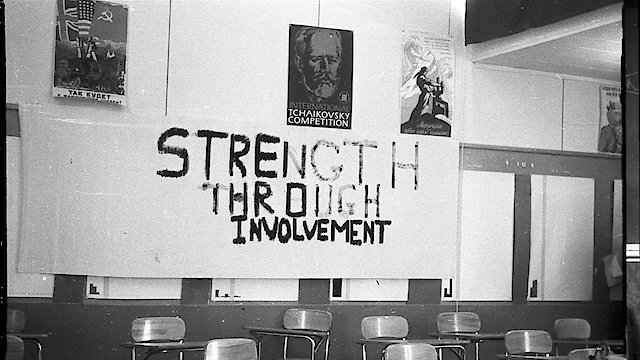
Lesson Plan: The Story of the Third Wave
Lesson Plan: The Story of the Third Wave
 7.2/10
Where to Watch Lesson Plan: The Story of the Third Wave

"Lesson Plan: The Story of the Third Wave" is a thought-provoking and engaging documentary film released in 2010 and directed by Philip Carr Neel. The film revolves around the firsthand account of an alarming social experiment, conceived by history teacher Ron Jones in 1967, which went on to inspire a novel, a theatrical play, and a German movie.
The film "Lesson Plan" unearths the chilling study, often referred to as 'The Third Wave', conducted in a Califonia high school during a week-long simulation to mimic the psychological development of an autocratic society. Ron, an enthusiastic and unconventional educator, intended to answer an innocent question about the Holocaust from one of his students: "How could the German populace claim ignorance of the slaughter of the Jewish people?" To answer this perplexing query, he kick-started an experiment that grew beyond his imagination, drawing the innocent into the dark shadows of fascism. He stumbled upon a scenario where proto-fascist dynamics took hold of an American classroom, unmasking the uncomfortable truth about how easy it is for democracies to turn into dictatorships and human beings to become pawns under an authoritative rule.
In the documentary, the interview style narrative highlights fiction and reality, looking into the raw dynamics of power and authority, conformity and lack of freedom, through conversations with the original students and teacher himself. The film is not only about the Third Wave experiment, but it also masterfully captures the ripple effect it had upon the lives of those students, not only throughout their study period but also in their adulthood.
Historical recordings and modern-day interviews with Ron Jones and others offers not only a detailed account of the Third Wave experience, but it also touches upon a broader conversation examining the individual's role within society. It pulls viewers into an introspective voyage, demanding them to question their own susceptibilities, their adaptability to conform to authoritative power. It offers a stark examination of groupthink and the ease with which individuality can be squashed by the urgent need to 'belong.'
Interestingly, this film features an interview with the renowned psychologist, Philip Zimbardo, who is known for his ‘Stanford Prison Experiment.’ Both the Third Wave and the Stanford Prison Experiment offer startling insights into the human inclination towards authority and conformity, becoming a part of a larger conversation among psychologists, educators, historians, and policymakers alike.
"Lesson Plan" also includes an interview with Scott Thomson, one of the original Third Wave students. His recollections and personal experiences with the Third Wave bring out the nuances of the authority-disobedience relationship, the allure of belonging, and the psychological confines of fascism, navigating the viewers through the troubling reality that history might comprehend, but we are still struggling to reckon with.
"Lesson Plan" employs a balanced blend of archival footage, contemporary interviews, reenactments and photos from the past to narrate this gripping story. The palpable emotion within the tight-knit group of students who partook in this experiment brings an element of personal connection. This documentary is undeniably a vein of riveting storytelling with substantial dramatic moments.
In essence, the film "Lesson Plan: The Story of the Third Wave" does not exist simply to recount details of a social experiment conducted half a century ago; it instead carries a timeless message. With its interview-style narrative, the film leaves a profound imprint, reflecting on the troubling way societies allow authoritative governance to take control, thereby cautioning us of the tangible potential for history to repeat itself. The unsettling resonance of its story-climax serves as a reminder to audiences that these lessons are still relevant today. It creates a disturbing uncanny echo of real-life power dynamics, exemplified in the modern political landscape.
This documentary is a must-watch for individuals who appreciate in-depth scrutiny of our sociopolitical patterns, our collective tendencies towards conformity, and the heightened willingness to yield to authoritative power. It can be a compelling educational tool and a conversation starter for anyone interested in understanding, exploring or studying human behavior, psychology, or social structures.
7.2/10