

Komol Gandhar
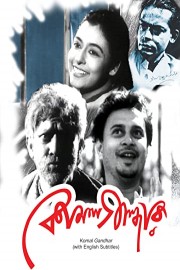
Komol Gandhar

Where to Watch Komol Gandhar

"Komol Gandhar" is an Indian Bengali film written and directed by celebrated filmmaker Ritwik Ghatak released in 1961. The movie's cast includes some of the most iconic actors of Indian cinema, notably Abanish Banerjee, Supriya Chaudhury, Bijon Bhattacharya, Satindra Bhattacharya, and Gyanesh Mukherjee.
The film is recognized as one of the best ever made in Indian cinema, staying authentic to its roots while also exploring universal themes. The heart of the story dwells on the deeply entrenched ideologies and traditions of Indian theatre, specifically those belonging to the Bengali subculture. It showcases the ambiguity, rivalry, and artistic struggles of the two popular theatre trends of Bengal during the '50s; the realistic 'IPTA' (Indian People's Theatre Association) and the commercial theatre.
The film revolves around the protagonist Bhrigu (Abanish Banerjee), a committed and passionate IPTA theatre actor, and his dramatic journey amid the persistent trials and tribulations of professional, personal, and ideological conflicts. These struggles are excellently woven within the overarching plot, allowing a deep exploration of psyche and ethos of the passionate artist.
Among the film's central characters is Anasuya (Supriya Chaudhury), who is the leading lady from the rival commercial theatre group. In a narrative twist filled with subtext and artistic imagery, Anasuya's path crosses with Bhrigu. As the narrative develops, who or what she represents becomes blurred, leaving the audience to question whether she is a symbol of urban theatre's modernity, an embodiment of personal love or an expression of collective dedication to the craft of theatre. The dynamic between Bhrigu and Anasuya forms the crux of the plot, portraying the contrast between intellectual theatre and commercial theatre, interspersed with undertones of love and emotional attachment.
"Komol Gandhar" tackles a range of themes from conflicts between tradition and modernity, debates over ideology and pragmatism, ephemeral versus the enduring nature of art, and the spiritual versus the material dimensions of life. Ritwik Ghatak narrates this intricately laced tale with an ethereal mixture of reality and fantasy, intellectual seriousness and aesthetic charm.
From a technical aspect, Ritwik Ghatak uses powerful visual metaphors throughout the film to underline the dilemmas, conflicts, and transformation of his characters and underscore the broader cultural paradigm. The use of music is also noteworthy, often acting as a character in itself, beautifully blending the traditional with the contemporary.
Supriya Chaudhury delivers an exceptional performance, enacting her complex character with immense sensitivity, while Abanish Banerjee captures the heart of his character Bhrigu, reflecting his inner turmoil and undying dedication to theatre with compelling authenticity. The strong supporting cast enriches the narrative, engraving it with realism.
"Komol Gandhar" is an icon of thoughtful cinema, undeniably rich in its storytelling, characterization, and technical sophistication. It's a film that carries the essence of its time while connecting to a universal audience through its exploration of ingrained problems in the theatre world and beyond.
In conclusion, "Komol Gandhar" represents Indian cinema's artistic depth and sensitivity to its fullest extent. Its unique blend of traditional and modern narrative elements, complex character study, and thematic richness converge to create a timeless piece of art. Whether you are an ardent art connoisseur, a theatre enthusiast, or a lover of beautiful cinema, "Komol Gandhar" is an enriching, thought-provoking cinematic experience.