
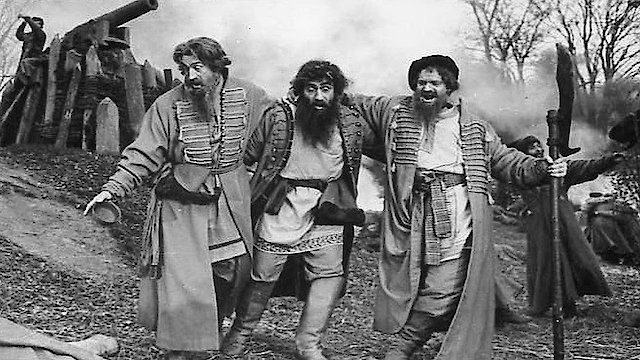
Khovanshchina

Where to Watch Khovanshchina

Khovanshchina is a 1959 Soviet musical drama film directed by Andrei Kozhevnikov, which is an adaptation of Modest Mussorgsky's unfinished opera of the same name. Set in 17th-century Russia amidst political and social upheaval, the film captures the tensions between old beliefs and emerging new ideologies, showcasing the rich cultural and historical landscape of the period.
The story revolves around the events following the death of Tsar Ivan the Terrible and the chaos that ensues during the power struggle for the Russian throne. As the nobility becomes increasingly fragmented, various factions vie for control, fueling a sense of urgency and inevitability that permeates the narrative. The film's protagonist, the ambitious and scheming Prince Ivan Khovansky, is portrayed by Aleksey Krivchenya, whose complex character embodies the moral dilemmas and aspirations of the time.
Khovanshchina delves into the themes of ambition, loyalty, and betrayal, weaving a tapestry of personal and political drama. Krivchenya's powerful performance captures Khovansky's internal struggle as he navigates a treacherous landscape marked by alliances and rivalries. His character becomes a symbol of the old guard, clinging to past traditions while grappling with the rise of a new order represented by Peter the Great, who seeks to modernize and transform Russia.
The film features a vibrant array of characters, each with their own motivations and backgrounds, contributing to the rich narrative fabric of the story. Anton Grigoryev plays the role of the dynamic leader of the Orthodox Church, whose spiritual authority is challenged by the shifting political tides. His conflict with Khovansky serves as a critical focal point in the film, representing the struggle between religious conservatism and the emerging secular power.
Aleksei Maslennikov portrays a pivotal character whose loyalties are tested amid the turbulent events. His character’s journey reflects the broader societal changes occurring in Russia, as individuals confront the impact of their choices on both personal and communal levels. The film illustrates how dreams of power and social change often come at a great cost, highlighting the human condition in times of crisis.
Visually, Khovanshchina is a feast for the eyes, with stunning cinematography that captures the opulence of the 17th-century Russian setting. The film’s production design reflects a meticulous attention to detail, recreating the architecture, costumes, and customs of the era, thus immersing the audience in a world that feels both expansive and intimate. The grand scenes are complemented by striking imagery that enhances the emotional depth of the narrative.
The score of Khovanshchina is equally noteworthy, featuring Mussorgsky's original compositions, which blend seamlessly with the film’s storytelling. The music serves as a powerful tool to evoke emotions, emphasizing the highs and lows of the characters' journeys. The choral arrangements resonate with the themes of the film, investing the drama with an additional layer of significance.
Kozhevnikov's direction brings an energy and urgency to Khovanshchina, skillfully balancing the operatic elements with the cinematic form. Each scene is crafted with precision, allowing for moments of tension, reflection, and grandeur. The interplay of light and shadow, combined with dynamic camera work, enhances the storytelling, making the audience feel the weight of history and the impact of characters' choices.
As the narrative unfolds, Khovanshchina presents a profound exploration of the intersection between personal desires and societal demands. It challenges viewers to consider the consequences of ambition and the sacrifices made in the pursuit of power. The characters are presented with moral quandaries that force them to confront their beliefs, resulting in moments of introspection and conflict.
Khovanshchina is more than just a historical drama; it is a contemplation of the human experience amidst change and turmoil. The character arcs, intertwined with the larger historical context, resonate with contemporary themes of identity, authority, and the quest for meaning in uncertain times. The interactions between the characters reflect the complexities of loyalty and personal ambition, offering insights that remain relevant even today.
In summary, Khovanshchina is a visually and musically stunning adaptation of a significant work of Russian opera, presented with a cinematic flair that brings the story's rich historical tapestry to life. It explores the perennial themes of power, faith, and the human condition against the backdrop of Russia's tumultuous past, making it a captivating film that continues to engage audiences with its depth and drama. The performances by Aleksey Krivchenya, Anton Grigoryev, and Aleksei Maslennikov breathe life into their roles, contributing to a memorable cinematic experience that invites reflection on the nature of ambition and the forces that shape our destinies.
Khovanshchina is a Drama movie released in 1959. It has a runtime of 124 min. Critics and viewers have rated it moderate reviews, with an IMDb score of 6.6..
