

Hunting Flies
Hunting Flies
 6.3/10
Where to Watch Hunting Flies

In 2016, a compelling character study found its way on to the silver screen in the form of a film known as "Hunting Flies". It was a Macedonia-Norway co-production that featured Jasin Mustafa, Besar Guta, and Burhan Amiti, among others, in a heart-wrenching narrative centered around the relentless pursuit of an ideal. Directed by the impressive talent, Izer Aliu, the movie stretched the boundaries of conventional storytelling, striking a perfect balance between pathos-laden human experiences and profound political commentaries.
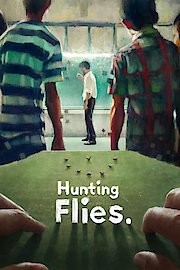
"Hunting Flies" begins by unfolding the concerns of Ghani (Jasin Mustafa), a charismatic albeit stubborn middle-aged school teacher, who is determined to hold on to his job. The precarious world that Ghani inhabits is revealed when the school he is teaching in is on the brink of shutting down due to political turmoil around the region. Ghani is disturbed by how easily his students are swayed by the tensions, and he makes it his mission to maintain order and continue to pass on knowledge in the school. He decides to gather and lock up his pupils in an empty classroom with the intention of continuing lessons and keeping the students away from the chaos outside.
As days go by, the lines between classic teacher-student dynamics begin to blur, unfolding an exploration of human nature. Mustafa's character keenly observes the blossoming of mini-hierarchies, alliances, betrayals, as a microcosmic representation of politics in the outside world. They form a starkly dysfunctional parliament, where each student attempts to outsmart the other, mirroring the disturbing realities of the world.
However, it's not just politics that "Hunting Flies" bravely faces head-on. It also deep-dives into issues of caste, religious divides, ethnicity, and nationality. It does so through the young characters who bring their varied backgrounds and prejudices to the locked classroom, allowing for open discussions that spawn arguments and fights among them.
The film forces the viewers to question societal norms and constructs by presenting an unbiased view of these exchanges, devoid of judgement. This neutrality is portrayed wonderfully by the eclectic ensemble cast of students, ranging from the innocent, the confused, and the stubborn, who together craft a perfect microcosm of a troubled society.
As the plot develops, the reasons behind Ghani's determination reveal far more about the man than just his stubbornness. His insistence on teaching and guiding his students stems not only from his loyalty to his job but also from his deeper personal adversities. This aspect of the narrative beautifully intertwines the personal with the political, drawing a compassionate portrait of Ghani, a man wrestling with his ideals in a world indifferent to them.
Visually, "Hunting Flies" is a feast that accentuates the narrative through its raw storytelling approach. The grim environment of the school and the cityscape of the Macedonian backdrop against which the narrative progresses are a considerable part of the narrative itself. The cinematography by Khalid Maimouni evokes an isolating sense of space – the distant town and forests, the dimly lit classroom, and the tumultuous sky – all serving to intensify the emotional depth of the story.
In conclusion, "Hunting Flies" is a brilliantly conceptualised, unique blend of political commentary and heart-rending human narrative. It delicately handles complex socio-political issues while simultaneously embodying the exploration and dissection of human behavior in challenging circumstances. It begs the viewer to question the essence of authority, power, and the very constructs of society. While grounded in a specific regional context, the themes it imparts are universaland ever-relevant in the political and social dynamics of our modern world. Each element of its design, from the orchestration of the narrative arc to the spellbinding performances right through to the visual storytelling, collaborates to make "Hunting Flies" a cinematic marvel, a testimony to the power of film-making as a vehicle for profound psychological and sociopolitical discourse.
6.3/10