

Hotel Yugoslavia
Hotel Yugoslavia
 6.4/10
Where to Watch Hotel Yugoslavia

Hotel Yugoslavia is a cinematically intriguing documentary film, ingrained with a unique blend of personal essay and historical archival footage, which takes viewers on an emotional journey through the tumultuous history of the Balkan region. At its helm is the thoughtful and reflective narration by Swiss-Yugoslavian director Nicolas Wagnières. The film presents a gripping narrative of the Balkan history, interweaved with the director's personal experiences and the larger-than-life symbol of Yugoslavian unity, the Hotel Yugoslavia.
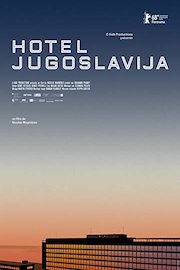
The film begins with the exploration of the titular Hotel Yugoslavia, once one of the grandest hotels in the Balkans. Positioned on the banks of the Danube in New Belgrade, Serbia, this immense skyscraper was built in 1969 and bore witness to the changing political and societal landscapes from the socialist era of Josip Broz Tito's “Third Way,” the embittered ethnic conflicts of the 1990s, the bombardment of NATO until the eventual breakdown of the federation. The hotel, a socialistic utopia that aimed to mirror Yugoslavia's vision, stood as a symbolic crossroad of sorts, a meeting point for affluent socialist dignitaries, celebrities, common people, and later, a shelter during the NATO bombings.
As the film delves further, it transitions seamlessly between the synthetic tranquillity of the present-day deserted hotel and the archival footages from a bygone era. The highlights include the images of Tito, the then Yugoslavian president, hosting the Non-Aligned Movement summit in 1961 and the 1972 footage of the Rolling Stones performing at the hotel's disco club. The exclusive images provide a retrospective viewpoint into Yugoslavia's radiant past — a counterpoint to the turbulence the nation would later face.
Yet Hotel Yugoslavia is not purely archival or historical in its approach. Threaded through the essays and recollections of history is Wagnières' exploration of his own Yugoslavian identity. Being born to a Swiss father and Yugoslavian mother, he splits his time between his father's homeland and his mother's homeland during his early days. The film layers the director's personal quest of identity and belonging on top of the historical storyline, creating a powerful combination of personal and national narratives. Through the juxtaposition of peaceful, present-day shots of the now-decrepit and empty hotel with chaotic, archival footages of war and societal upheaval, the viewers are provided with a thought-provoking insight into the passage of time, national identity, and collective memory.
The director has expertly interspersed the usage of drone footage to offer the viewers a different perspective. These overhead shots of the abandoned hotel, its surroundings, and cityscapes offer a visual representation of the pendulating highs and lows in the historical timeline. At the same time, it symbolizes the lingering presence of the socialist era legacy, the heavy shadow of which still looms large over the region.
The film effectively narrates the divergent history of the Yugoslav federation from its heyday to its dissolution, and the effect it had on its people. But it is more than a history lesson; it questions the very nature of memory, collective forgetting and denial, the carving of identity, and the impact of political decisions on the daily lives of people.
In the end, Hotel Yugoslavia delivers a profound documentary experience that takes on a hybrid form, intertwining personal narratives, historic documentation, spatial exploration, and abstract reflection. The cinematic link that Wagnières builds between the personal and the political, the past and the present, and the real and the imagined offers something particularly poignant. It is, in essence, a story rooted in history, identity, and memory, providing a unique insight into the former Yugoslavia through the metaphorical lens of the once luxurious and symbolically significant hotel.
6.4/10