

God Does Not Play Dice - Albert & Mileva Einstein
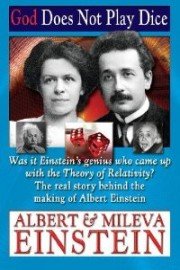
God Does Not Play Dice - Albert & Mileva Einstein

Where to Watch God Does Not Play Dice - Albert & Mileva Einstein

God Does Not Play Dice – Albert & Mileva Einstein is an enthralling historical drama casting Robert Goss, Teresa Parisone, and Mike J. Politis which brings to life the story of one of the most revolutionary minds in human history. The film explores how Albert Einstein's relationship with his first wife, Mileva Maric, impacted his ground-breaking scientific achievements. It provides a glimpse into the unseen side of Einstein's life - his struggles, relationships, and the emotional challenges he faced on the journey to becoming the genius we all know.
The film begins in the late 19th century as we meet a passionate and young Albert Einstein (Robert Goss), a physics student at the Polytechnic Institute in Zurich. Goss captivates the audience as he highlights Einstein's passionate curiosity towards understanding the universe's mysteries.
The film also introduces Mileva Maric (Teresa Parisone), a fellow student at the Polytechnic Institute and one of the few women studying physics at the time. Audiences quickly come to admire her notable character rendered compellingly by Parisone. The gifted Mileva is portrayed as a person of strength, intelligence, and resilience, who is not afraid to break societal norms. The on-screen chemistry between Goss and Parisone captures the romance, shared intellectual pursuits, and eventual strain that marked Albert and Mileva's relationship.
The narrative shifts to explore the enormous challenges that both Mileva and Albert face on their journey. They grapple with social stigma due to their unorthodox relationship, the hardship of starting a family, their financial struggles, and balancing family life with their shared passion for physics.
As the title, "God Does Not Play Dice," suggests, the movie also delves into Einstein's philosophical struggles as he seeks to reconcile his faith with his scientific perspective. It looks into the famous phrase uttered by Einstein in his struggle to accept the uncertainty principle of quantum mechanics, stating his belief in predictable laws in the physical world.
Mike J. Politis delivers a praiseworthy performance playing the supporting role of Einstein's best friend and fellow scientist, Michele Besso. His character provides insight into the life and demeanor of Albert Einstein outside of his family life and his professional world. The friendship between Einstein and Besso, marked by respect, rivalry, and mutual encouragement, adds an extra layer of depth to the narrative.
The storytelling in "God Does Not Play Dice – Albert & Mileva Einstein" is nuanced and dimensional, digging deep into the main characters’ minds and emotions. Set against the backdrop of breakthroughs in early 20th century science, the film presents a distinct perspective on the life of Albert Einstein. It paints a picture of the famous physicist, not just as an icon of scientific brilliance, but as a multi-faceted individual with personal predicaments and vital relationships.
The film’s tone manages to balance the high-stakes emotion of personal drama with intellectual discourse, creating a vivid tapestry of human experience and groundbreaking scientific discovery. Views on this film will likely be influenced by one’s level of interest in physics and biographical content, but even viewers with a limited interest in those areas may be drawn in by the convincing performances and compelling narrative.
The film also offers exquisite production values, with every frame beautifully constructed to bring the period setting to life. The staging of the historical era from the clothes and the set design to the language and manners of the characters is highly convincing.
To sum it up, "God Does Not Play Dice – Albert & Mileva Einstein" is much more than a biographical drama. It's a beautiful blend of science, history, romance, and philosophical discourse that examines the extraordinary life of one of the most influential figures of the 20th century. It deserves rightful appreciation for stepping out of the stereotypes and providing audiences an authentic look into the life of Albert Einstein, beyond his scientific legacy.