

Gai Shanxi and her Sisters
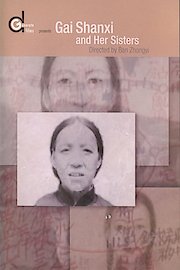
Gai Shanxi and her Sisters

Where to Watch Gai Shanxi and her Sisters

Gai Shanxi and Her Sisters is a 2007 Chinese documentary directed by acclaimed filmmaker and visual artist Yang Banban, who has maintained a reputation for bringing to screen raw and emotionally charged narratives. Produced by Yang Wang, this documentary is Yang Banban's empathic portrayal of women who have been forced to deal with egregious acts committed against them in the dark era of World War II. This film is a bold step towards unearthing the veiled historic atrocity committed by Japanese troops during their invasion of China.
The documentary revolves around the real-life character Gai Shanxi, an ordinary Chinese woman living in Shanxi province. She is the centerpiece of the film that masterfully captures her life journey from a trauma-riddled past to her brave fight in pursuing justice and acknowledgment of the horrific ordeal she and her sisters had to endure during wartime. Gai Shanxi is one of the so-called ‘Comfort Women’, a euphemistic term given to females who were forced into sexual slavery by the Imperial Japanese Army during World War II.
This is not a traditional documentary rather, it’s a unique cinematic experience. It explores an unconventional mode of storytelling, comprising of interviews, archival footage, and reconstructions, presenting an evocative, contemplative, and necessary exploration of history, memory, and trauma, telling a painful, forgotten story that was long left out of the official historical accounts of the war. It delves into the issues of wartime sexual violence, lingering scars of the survivors, their present struggles and their attempts to make peace with the past, while also exploring collective memory and justice.
Gai Shanxi and her Sisters offers viewers an intimate, patient perspective on these women’s lives, sustained by their courage, resilience, and determination. The film is a testament to all the females who suffered the ignominy of sexual slavery, yet dared to demand justice and recognition despite societal indignation. While the process of seeking justice is long and arduous, the women showcased in the documentary refuse to let their spirits wane.
Yang Banban, while narrating the ordeal of these courageous women, underlines systemic gender violence as he documents the horrors of war and their ceaseless fight for justice. His documentary is a moving exploration of a painful historical chapter and is a tribute to the sheer strength of the human spirit to not only overcome but also to resist degradation and denial, and to call for justice, acknowledgment, and to finally, heal.
In its 2007 debut, Gai Shanxi and her Sisters was an instant conversation starter, redefining historical cinematic approaches to World War II's lesser-known facts in China. It presents first-hand accounts that are both heartrending and informative, shedding light on the unspeakable experiences these women had to endure. It emerged as a poignant critique of historical amnesia and denial, demanding that every war crime and all of its victims be remembered and acknowledged.
In its essence, Gai Shanxi and her Sisters is an assertive recognition of the strength and spirit of the women survivors. Although painful and tragic, their story is also one of undeniable courage and resilience. It's a jarring exploration of the past that demands a response from its audience. Yang Banban’s carefully curated presentation serves as a call to action reminding its viewers of the importance of acknowledging history, no matter how dark, as part of the healing. It makes certain that the story of Gai Shanxi and her sisters is no longer hidden and forgotten. It's a groundbreaking film that documents a necessary narrative to bring solace and justice to the victims of these horrific offenses.
As a documentary, Gai Shanxi and her Sisters does more than simply tell a story. It passionately campaigns for recognition, justice, and remembrance of the past. It's a work that delicately handles the intricacies of human emotions and resilience, creating a must-watch piece that appeals on both humanitarian and historical grounds, impacting an audience beyond state boundaries. It continues to garner appreciation for its director, Yang Banban, acclaimed for his brave and compassionate narrative approach to making films that question, challenge and redefine social and historical norms.