

Forty Thousand Horsemen
Forty Thousand Horsemen

Where to Watch Forty Thousand Horsemen

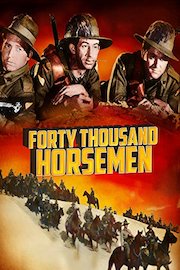
Forty Thousand Horsemen is an engaging Australian war film that proudly showcases the courage and fortitude of the Anzac Light Horse Brigades. Directed by Charles Chauvel and released in 1940, the film stars notable actors such as Grant Taylor and Chips Rafferty. The film is about the Australian Light Horse military forces which led the final phase of the turbulent Middle Eastern Campaign during World War I.
The movie serves as an intriguing war-drama that centres around three dedicated and patriotic Light Horseman - Red, played by Grant Taylor, Jim, portrayed by Chips Rafferty, and Larry, played by Pat Twohill. These soldiers exhibit an endearing camaraderie that emerges from shared experiences, triumphs, and losses. It is around them that the narrative of the movie is woven, seamlessly combining episodes of historical significance with touching personal accounts of camaraderie, endurance, sacrifice, and love.
Set against the stark and riveting backdrop of World War I, the film provides an authentic insight into the role and experiences of the Australian Light Horse brigades in the Middle Eastern desert. Their daring tasks and their daring exploits are showcased with a good mix of action, drama and a touch of romance. Also noteworthy is the film’s memorable portrayal of the historic Battle of Beersheba, one of Australia’s most significant military successes.
The film stands out for its exceptional performances. Grant Taylor convincingly portrays the rugged, charismatic character of Red who is admired and respected by his comrades. He evolves from a tough, hardened soldier into a deep, emotional character, raising the emotional stakes of the film. On the other hand, Chips Rafferty plays the role of Jim with equal finesse. He brings a softness to his character, countering Red’s toughness and adding a touch of unbending loyalty to a friend, even in the face of danger.
Forty Thousand Horsemen also touches upon the themes of romance and unrequited love through a subplot revolving around French-Australian woman, Juliet Rouget played by Betty Bryant, who plays a spy for the Allies and becomes the unwitting focus of the three friends' affections.
Director Charles Chauvel skilfully uses these personal stories to depict the brutality of the war, the resilience of the common soldier, and the indomitable spirit of human nature that refuses to bow down, even in the face of insurmountable obstacles.
The landmark battle scenes are choreographed and presented with remarkable realism and a sense of authenticity that can draw the audience deep into the heart of the conflict. Notably, the film does not shy away from portraying the harsh realities and ruthlessness of war, making it a gripping watch.
The cinematography of Forty Thousand Horsemen deserves a special mention for its stark portrayal of the harsh desert landscapes that served as battlegrounds, immersing the viewer in the middle of the action. The film’s use of light and shadow, as well as its decision to primarily film in real desert locations, enhances its realistic depiction of the difficult conditions experienced by the Light Horsemen.
The film's score, composed by Lindley Evans, adds another layer of richness to the narrative, accentuating the moods of the scenes, whether they are triumphant, poignant, or intense.
Released during the beginning of World War II, the film was an important morale booster for a country once again finding itself at war. The fact that Forty Thousand Horsemen not only became a commercial success but impacted national morale depicts the film’s intricacies that have stood the test of time.
A tribute to the Anzac spirit, it is a rousing piece of cinema that unites action, drama, romance and patriotism into a curiously compelling blend. With strong performances, captivating direction, and stunning cinematography, Forty Thousand Horsemen stands as an engrossing watch for history buffs and film enthusiasts alike, transcending the passage of time to retain its cultural relevance.