

Flying Monsters with David Attenborough
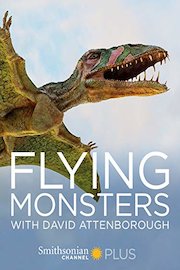
Flying Monsters with David Attenborough

Where to Watch Flying Monsters with David Attenborough

Flying Monsters with David Attenborough is a breathtaking and compelling documentary film that is sure to captivate both the scientifically curious and lovers of beautiful cinematography. Broadcast by National Geographic and Sky 3D, it offers viewers an unparalleled journey back in time to the age of flying dinosaurs, a period that is as fascinating as it is enigmatic.
The intriguing narrative combined with sophisticated 3D technology places this film into a unique genre of storytelling. Viewed through the lens of famed natural historian Sir David Attenborough, the evolution, life, and eventual extinction of the flying dinosaurs or pterosaurs that ruled the skies during the time of the dinosaurs are explored.
With a runtime of 70 minutes, the film is paced to keep viewers constantly engaged. The movie begins with Attenborough holding a fossil that was found in the 1780s- the fossil of an unknown creature with a 2.5-meter wingspan. It was the first ever discovered flying dinosaur or pterosaur. He sets the stage with an exploration of the controversy that ensued upon the discovery, with scientists at the time trying to understand how such a huge creature could have taken to the skies.
Envisioned as an extended journey from the dawn of the pterosaurs, the narrative takes viewers to several significant geologic locations. These span continents, from the deserts of Utah where the remains of the biggest pterosaurs have been recovered, to the Jurassic Coast of Southern England, where the mystery of how they could even fly began.
In "Flying Monsters with David Attenborough", viewers not just learn about these winged creatures, but 'see' them in action through the magic of state-of-the-art 3D technology and computer-generated imagery (CGI). Audiences are given an almost visceral experience of these creatures soaring above them, diving into oceans, and engaging with their environments and each other. This 3D visual enhancement is what makes this documentary stand out as it transports viewers 220 million years back into history.
But this is not just a visual spectacle; the core substance of the documentary is the scientific detective story piecing together how these creatures worked, lived, and ultimately perished. Attenborough collaborates with top-notch paleontologists and aeronautical engineers to discuss pterosaur fossils, covering everything from anatomy to flight mechanics. Digital animations meticulously recreate various pterosaur species, bringing to life what bones and fossils only hint at.
What is fascinating is the portrayal of the earth's changing environment and how this influenced pterosaur phenotypes. The evolution of these creatures through different epochs is artfully depicted, showcasing their adaptability and resilience across various climate changes and geologic periods. The depiction of Quetzalcoatlus, the largest known pterosaur, is particularly awe-inspiring, with a staggering wingspan that would rival small aircraft.
"Flying Monsters with David Attenborough" also shines in explaining the science behind flight. Attenborough meets with experts in animal locomotion and aerodynamics. They craft comparisons between Pterosaurs' flight and that of current high-performance gliders, birds, and bats, giving viewers deep insight into the marvel of these ancient creatures' capabilities.
Through it all, Attenborough's fascination with the subject is infectious. His natural storytelling ability and visible passion make the science and history accessible and absorbing, sparking interest, and curiosity in viewers of all ages. His narration both educates and entices the audience into the world of paleontology and the mysteries that still surround the majestic creatures that once ruled the skies.
At the end, "Flying Monsters with David Attenborough" provides far more than a picturesque landscape populated with these prehistoric flying beasts. It offers a captivating voyage through time, a celebration of natural history and science, a testament to the wonders of evolution, and a stark reminder of the fleeting nature of life itself. It's an awe-inspiring documentary, a treat for the eyes, and a feast for the mind.