

Fidel Castro: Life for the Revolution
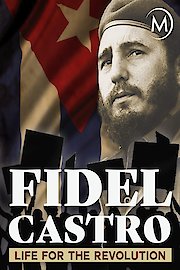
Fidel Castro: Life for the Revolution
 5.0/10
Where to Watch Fidel Castro: Life for the Revolution

Fidel Castro: Life for the Revolution is a compelling documentary film released in 2004 that delves into the life and legacy of one of the most prominent and controversial figures of the 20th century, Fidel Castro. Directed with a keen eye for historical context, this film explores Castro’s formative years, his rise to power, and the sociopolitical landscape of Cuba before, during, and after the revolution.
The documentary features interviews with key individuals who played significant roles during this tumultuous period, including Fidel Castro himself, offering viewers rare insights directly from the man at the center of these events. John Hedges, who serves as the film's narrator, guides the audience through an impartial and balanced examination of Castro's life, allowing the multiple dimensions of his character to unfold. With profound historical analysis, Hedges enriches the narrative with context that underscores the complexities of the Cuban Revolution and its global implications.
One of the film's standout elements is its focus on Castro's early life. Viewers are taken back to Castro’s childhood in rural Cuba, where he was born into a wealthy family. This background shaped his early views on social justice and inequality, ultimately fueling his desire to enact change within Cuban society. The film does an excellent job of illustrating how these early experiences and the political climate of the time laid the groundwork for his revolutionary ideas.
As the documentary progresses, it highlights the influence of various political ideologies that informed Castro's worldview. From socialism to nationalism, the film illustrates the ideological struggles that accompanied the burgeoning revolutionary movement. Huber Matos, an important figure in the Cuban revolution, shares his perspective, providing audiences with additional context regarding the motivations behind the uprising against the Batista regime. His insights also serve to illustrate the often tumultuous relationships between different factions within the revolutionary movement itself.
The film takes viewers through the revolutionary struggle, chronicling key events and turning points leading to Castro’s ascension to power in 1959. Archival footage and photographs vividly capture the energy and fervor of the Cuban people as they rallied behind Castro and his comrades, seeking an end to corruption and inequality. The viewer is treated to a front-row seat to the passion that defined this era, showcasing both triumphant moments and the challenges faced by the revolutionaries.
Fidel Castro: Life for the Revolution does not shy away from presenting the polarizing nature of Castro's leadership. While the film portrays the positive changes brought about by the revolution, including improvements in healthcare and education, it also addresses critiques of Castro's authoritarian governance and the suppression of dissent. This multifaceted portrayal allows for a more nuanced understanding of his legacy, and the film challenges the audience to consider the complex motivations and consequences of his policies.
The documentary also tackles the impact of international relations following Castro's rise to power, particularly his alignment with the Soviet Union during the Cold War. The film meticulously discusses the ramifications of the United States' response, including the Bay of Pigs invasion and the Cuban Missile Crisis. These events not only shaped the course of U.S.-Cuba relations but also had far-reaching effects on global geopolitics.
Interwoven throughout the documentary are personal anecdotes and reflections from Castro and those who knew him, creating an intimate narrative that humanizes the historical figure. Viewers gain insight into Castro's personal beliefs, his charismatic but often polarizing persona, and his vision for Cuba. The film reveals a man deeply committed to his ideals, even at great personal and political cost.
Through a combination of personal testimonies, historical analysis, and vivid imagery, Fidel Castro: Life for the Revolution ultimately serves as both an educational tool and a thought-provoking exploration of a man whose life was inextricably linked to the fate of an entire nation. The documentary invites viewers to engage critically with history, providing them with the tools to form their own opinions on Castro's enduring impact on Cuba and the world.
The film encapsulates the essence of a revolutionary figure whose journey was marked by both remarkable accomplishments and significant controversies. With a rich array of perspectives, Fidel Castro: Life for the Revolution stands as a testament to the power of film as a medium for exploring complex historical narratives, making it an essential viewing experience for audiences interested in history, politics, and the intricacies of revolutionary movements.
5.0/10