

Erasing Hate
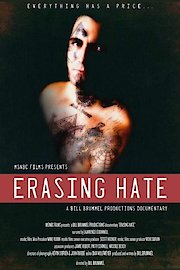
Erasing Hate
"Everything Has A Price..."
 6.5/10
Where to Watch Erasing Hate

Erasing Hate is a powerful 2011 documentary film centered around the life of Bryon Widner, a man famously known as a former skinhead who made the decision to leave behind his past of hate and violence.
Our journey begins with Bryon at the forefront of violent, racially-motivated organizations, causing havoc and spreading fear. Seen as a notorious white supremacist, he also carries on his skin an artistic documentation of his past - tattoos covering his face and body, each telling a story of hatred and bigotry, symbolizing a past life he wishes to leave behind. This film provides an insightful look into the white power movement in the United States, giving viewers unfettered access to the very heart of homegrown extremism.
The core of the story - and perhaps the most inspiring part - involves Widner's journey towards transformation and redemption. After meeting Julie, a woman who shares her own experiences with hateful movements, he finds the courage to root out the hatred ingrained in his heart. With her support, Bryon embarks on a challenging journey of transformation that is both physical and emotional.
Erasing Hate chronicles Widner's dramatic departure from the white supremacist movement and the dangerous consequences that came with it, as well as his intense physical journey to remove the racist tattoos from his face and hands. The removal process, meticulously chronicled throughout the documentary, is both excruciatingly painful and incredibly expensive, yet necessary for him to shed the past and embrace a future of tolerance and acceptance.
The film artfully balances his physical transformation with an intimate exploration of his mental and emotional evolution. We see a man dealing with deep-rooted issues of identity and self-worth, trying to mend the devastating consequences of a hate-filled past while trying to reconcile with the humanity he had long forsaken.
Widner's wife, Julie, plays a vital role in the narrative. Julie holds an essential part in Bryon's transformation, supporting him throughout his painful journey, embodying resilience, and proving that love and understanding can be powerful vehicles for change.
Also noteworthy is the role of Daryle Lamont Jenkins—an African American activist who, despite his natural animosity towards Widner, provides crucial support for his dramatic metamorphosis. Jenkins exemplifies the essence of aiding someone in their journey towards change, no matter how difficult it may seem. It's a statement about the power of compassion and the lengths to which someone can go to assist another human being turn a new leaf.
The film is a testament of third chances in life and powerfully interweaves other pertinent themes such as redemption, love, newfound tolerance, and forgiveness. It reveals that people can evolve, change their beliefs, and lay to rest their old selves. It's a pertinent reminder that we should continually challenge hatred and work towards building a diverse society where everyone is respected, regardless of their racial or ethnic origin.
The director, Bill Brummel, casts a critical yet empathetic eye over his subject, achieving a brutal realism that is thoughtfully paralleled with the movie's innate optimism. His empathetic approach enables us to observe Bryon's vulnerability, witnessing moments of pain and anguish that are raw and visceral, making us feel every bit of Widner's struggle.
Shot over the course of 16 months by award-winning documentary filmmaker Bill Brummel, Erasing Hate paints a potent portrayal of redemption and transformation. The production segues smoothly between Widner's past and present, using archival footage interspersed with compelling real-time imagery.
Erasing Hate serves as a valuable insight into the insidious and destructive power of hate-filled ideologies, while also serving as a beacon of hope, showing that even the most entrenched prejudices can be overcome. The film presents a compelling narrative journey, showcasing the power of human resilience, the efficacy of unwavering support, and the enduring pursuit of acceptance and change.
By showcasing the power of transformation and the persistent fight against hate, Erasing Hate forces us to confront our preconceived notions, prejudices, and the power of redemption. It advocates for the belief that we are not defined by our past but by our capacity to change and learn.
6.5/10