

Documentary: Max Lorenz
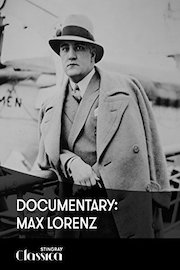
Documentary: Max Lorenz

Where to Watch Documentary: Max Lorenz

Max Lorenz: Hitler's Favorite Tenor is a fascinating documentary film that explores the life and career of Max Lorenz, a German heroic tenor back in the era of the Third Reich under Adolf Hitler. Directed by Claus Wischmann and Eric Schulz, the film is a revelation not merely of a powerful and brilliant voice, but also of a man who was able to walk the tightrope of the political dichotomy in Nazi Germany.
The film starts with a brief introduction of Lorenz, tracing his humble beginnings in Dusseldorf, Germany, where he was born in 1901. From his early days of singing in church, his rise within the industry was meteoric, culminating in him becoming one of Germany's most celebrated Wagnerian tenors in the 1930s and 1940s.
One of the noteworthy aspects about Wischmann and Schulz's direction is how they balance an exploration of Lorenz's personal journey with Germany's socio-political climate. Stylistically, the film is a mix of interviews and archival footage. Clips of Lorenz's performances are shown along with historical materials — old recordings, images, and original film footage present a vivid impression of the epoch's atmosphere, shedding light on Lorenz and the societal controversy around him.
At the crux of the documentary is Lorenz's designation as Hitler's "favorite tenor". And while he was favored by a dictator who was responsible for one of the darkest periods in human history, the documentary delves into Lorenz's delicate navigation of those times. Despite his affiliation with the Nazi regime, Lorenz aided many of his Jewish colleagues, even at a great risk to himself.
The dramatic intensity in Lorenz's life story is matched by the compounding crescendo of his extraordinary performances. The filmmakers splendidly fused Lorenz's performances, most importantly as Wagner’s "Tristan", along with testimonies from music historians and noteworthy artists in the operatic field. They collectively laud Lorenz's impressive vocal range, his magnetic stage presence and his heroics on stage that enthralled audiences.
Moreover, the film's narrators include distinguished opera singers like Dietrich Fischer-Dieskau, René Kollo and others, who provide valuable insights into the fascinating life of Lorenz while also humanizing this larger than life figure. Crucial to the narrative is Lorenz's wife, Charlotte Appel, whose influence on Lorenz’s career is detailed significantly.
Emphasized throughout is Lorenz's challenging relationship with the Nazi propaganda machine while trying to survive the wartime circumstances. Intriguing in this context is the inclusion of Wieland Wagner, the grandson of composer Richard Wagner, who made a resolute stand against the Nazis. The juxtaposition of Lorenz and Wagner’s narrative and their survival methods offers an intriguing psychological angle on the moral crises faced by many during the Nazi regime.
Special mention needs to be made about the seamless manner in which the film's background score is integrated. Some of the finest compositions of Wagner and Verdi, particularly ones Lorenz was celebrated for, weave together the narrative with a resounding emotional impact.
Max Lorenz: Hitler's Favorite Tenor is an engrossing tribute to a phenomenal singer who found himself in the midst of political turmoil. Ultimately, it illustrates a profound portrait of a survivor who used talent and tact to navigate a remarkable career during a morally and ethically challenging era. The film insightfully probes the blurred line between the politics of the time and the sanctity of art, encouraging viewers to consider the impact of such an uneasy alliance.
The documentary film is a must-watch for enthusiasts of classical music and opera. But even for viewers less familiar with the genre, Max Lorenz: Hitler's Favorite Tenor offers an in-depth exploration of a significant period in history, and the story of a man whose melodious voice remained unscathed amidst the harsh crescendo of war and chaos.