

Disorder utional Use
Disorder utional Use
 7.4/10
Where to Watch Disorder utional Use

Disorder (Xianshi Shi Guoqu de Weilai) is a compelling, powerful, and slightly disturbing documentary film that was released in 2009. Directed by Chinese avant-garde filmmaker Huang Weikai, the movie provides a stark and gritty glimpse of urban life in Guangzhou. At the same time, the film also serves as a metaphorical dissection of modern Chinese society as a whole, embodying experiences that border on absurdity, surrealism, and, at times, may even be described as dystopian. Disorder skillfully portrays the chaos and disorder that pervade the rapidly growing and changing Chinese societies in their sprawling urban settings.
In its raw and straightforward style, Disorder is not your typical cinema—there is no heartwarming tale or protagonist with whom you can identify. Instead, its unique narrative style is disorienting yet captivating, capturing footage from over one thousand hours of surveillance tapes collected from the police, threading together unrelated incidents into a chaotic portrayal of contemporary Chinese urban life.
The film doesn't follow a traditional narrative or plotline. Instead, it presents a series of bizarre and disturbing episodes, including a man selling ‘invisible’ cell phones, a troupe of dancing dwarfs, a restaurant that specializes in animals like rats and snakes, a nighttime raid on an illegal meat trade, a mentally ill man halting traffic by dancing in the street, and several collisions, suicides, and floodings that appear to be a daily part of life in Guangzhou.
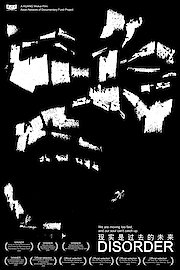
A fundamental feature of Disorder is its unique visual style. The entirety of the film is presented in grainy black-and-white footage, enhancing its raw, almost voyeuristic tone. The choice of jerky hand-held cameras contribute to the movie's restless energy, further amplifying the atmosphere of unease and tension. The absence of color and shadowy cinematography give the footage an eerie, dreamlike quality that blurs the line between sleep and wakefulness, sanity and madness, reality and spectacle.
The film's director, Huang Weikai, moves beyond simple observation or sensationalism. He employs the technique of montage to shape the footage, pushing the stories and visuals to the extreme. The resulting narrative resembles a maelstrom of shifting images, a tumultuous whirlwind of faces, animals, accidents, and street-side vendettas, all set to the soundtrack of Guangzhou's cacophonous cityscape.
Disorder is not merely a document of city life but a commentary on the dramatic social changes and erosions of moral values happening in China. It successfully captures the fragility embedded within the sprawling urban development and rapid modernization. It holds up a mirror in which the subjectivities and idiosyncrasies of contemporary China are disturbingly reflected.
While the film often seems grim, it is punctuated with flashes of absurd humor and oddities. Huang Weikai's uncompromising portrayal of reality does not shy away from portraying humor, poetry, and peculiarity. This confirms that Disorder is not just about desolation and confusion. It also serves as a testament to the resilience of the human spirit, capable of maintaining its equilibrium amidst chaos.
Despite not offering easy resolutions or any clear explanation for the depicted events, Disorder prompts its audience to reflect upon the human condition in the face of rapid change. It explores the precarious balance between societal order and dysfunction, human ingenuity and insanity, urban progress and the stark realities unearthed in its wake. Disorder showcases the dichotomy which the bottom stratum of urban society both feeds on and propels—the polarity of development and chaos, ethos and decay, civilization and wildness.
In summary, while Disorder may not be for everyone's taste, it is an utterly compelling and often transfixing cinematic experience that delves deep into the psyche of modern urban Chinese life. Huang Weikai's distinct narrative style and mesmerizing visual aesthetic ensure that Disorder (Xianshi Shi Guoqu de Weilai) leaves a lasting impression upon its viewers, showcasing the poignant, absurd, and often harrowing realities of the world's fastest-growing economy.
7.4/10