

Bolivia
Bolivia

Where to Watch Bolivia

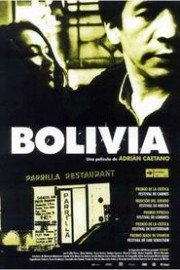
Bolivia is a raw, poignant and social drama directed by Israel Adrian Caetano, starring Freddy Flores and Rosa Sanchez in the main roles. The film casts a glaring light on the issue of racial and social discrimination in Argentina via the riveting story of Freddy, a Bolivian immigrant.
Freddy Flores plays the central character, Freddy, a humble, industrious man who is a native of Bolivia. In pursuit of a better future and to meet the financial needs of his family back home, he decides to immigrate to Argentina. Upon arrival, Freddy finds himself not in a land of dreams but a world of inescapable hardships, beginning with a daily struggle to survive in a society that views immigrants with disdain.
Freddy ultimately ends up working in a sinister, dirty, and loud bar-diner, which exists as a sort of microcosm reflecting the larger societal dynamics of Buenos Aires, Argentina's capital, where the film is set. Although intense, the film allows audiences a deep dive into an unseen Argentina. The seedy underbelly of a marginal society, the underdogs, racial bigotry, social and economic disparity, it’s all unveiled layer by layer.
Rosa Sanchez plays the character of Rosa, a native Argentine waitress working alongside Freddy, who effortlessly personifies attitudes towards Bolivian immigrants. Her character marks an important contrast, as well as a bridge, diving headfirst into the tumultuous sea of prejudices her society is deeply mired in, while at the same time offering Freddy a semblance of understanding.
Shot in black and white, the film's grim, bleak visual tonality mirrors Freddy's world and the alienation he experiences in it. Director Caetano's decision to film in this format feels like a conscious choice to underscore the harsh socio-political realities the story explores. These aesthetics are further emphasized by the minimalistic set design and gritty cinematography.
The dialogue in Bolivia is filled with heavy regional accent and slang, contributing to the authenticity and establishing a strong sense of place and culture. The dialogue carries an important part of the storytelling, injecting nuances into characters' dynamics and portraying the clash of culture and class.
Freddy Flores, with his impactful performance, draws us into his character's journey, navigating a harsh, unfamiliar land with resilience. We become spectators to his endurance, hopes, and the eventual reconciliation with the fact that his dreams of a better livelihood may not exist. He enacts his role with an authenticity that rings true, deftly conveying Freddy's hopes and despair, joy, and disappointment.
Meanwhile, Rosa Sanchez effectively portrays the cultural prejudices and initial disapproval of the immigrant Italians and Bolivians before her character's perspective evolves throughout the film. She is a strong presence, even when silent, helping to create the necessary tension on screen.
While Bolivia is indeed a heart-wrenching narrative concerning one man’s strife, it also becomes a broader social commentary on the bigotry and prejudices rampant in society. Moreover, native Argentine characters who blur the line between law and crime, righteousness and evil, they all instigate the audience to ponder on personal virtues, societal norms, and political relics.
In conclusion, Bolivia is not merely a film but an intimate, powerful examination of social realities often hidden behind the glitz and glamour of the silver screen. This film is a stark portrayal of a society grappling with immigration and its subtexts of classism and racism, marrying truthful performances with an intimate narrative to push audiences to question and observe discrimination from a new perspective.