

Black Beach White Beach: A Tale of Two Beaches
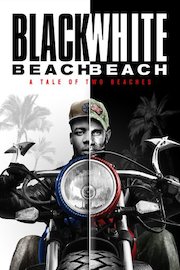
Black Beach White Beach: A Tale of Two Beaches

Where to Watch Black Beach White Beach: A Tale of Two Beaches

Black Beach White Beach: A Tale of Two Beaches is a fascinating and thought-provoking documentary film directed by Ricardo Khayatte that explores the racial and socio-economic divisions that play out every year at a beach in Myrtle Beach, South Carolina. This 2017 documentary film with a runtime of approximately 54 minutes brings into focus the harsh realities and issues surrounding racial inequality in America, using an annual phenomenon at Myrtle Beach as an illustrative case study. However, it is far more than just a simple review of beach economics as it delves deeply into America's persistent racial divide and the struggles for social justice.
The documentary film highlights two motorcycle festivals that occur on Memorial Day and Labor Day at Myrtle Beach: the Harley Davidson rally, predominantly attended by older white Americans, and the Black Bike Week, which is largely attended by young African-American men and women from around the country. Despite taking place in the same city and attracting motorcycle enthusiasts alike, these two festivals illustrate a complete microcosm of the broader American society with its enduring racial tension, systemic prejudice, and pervasive discrimination.
Khayatte dovetails perception and reality, as he presents a comparative analysis of these two bike fests. The Harley Davidson rally is presented as a buoyant celebration amid a welcoming city, while the Black Bike Week becomes a subject of contention with focus being placed almost exclusively on the negative aspects: the noise, the crime rate, and the general failure of authorities to manage the event. Moving between city council meetings to the frontline of the festivals themselves, Khayatte crafts a portrait of a city divided along racial lines and a nation that struggles with the same.
The film seeks to challenge these preconceived notions by giving voice to Black Bike Week's attendees, while inviting experts in sociology and race studies to offer their insightful commentary. Interviews are intercut with BBC news footages, city council discussions, and scenes from both events, amplifying the sense of inequity and demonstrating how traditions can become platforms for systemic bias.
Black Beach White Beach: A Tale of Two Beaches also digs into the history of Myrtle Beach, from its origins as a segregated town to its turbulent journey through the Civil Rights Movement and how these historic events have shaped the city's current attitude towards the annual festivals. This segment of the film is necessary for the viewer to comprehend the magnitude and depth of the issues at hand. It contextualizes the issue and presents a critical historical analysis, making it clear that the challenges faced today are deeply rooted in America's past.
In this documentary, Khayatte makes it a point to highlight the opposition faced by Black Bike Week attendees, whether it's from the authorities who impose controversial and restrictive traffic patterns, the local shop owners who conspicuously close their businesses during the event, or the media who only seems to spotlight the problems rather than the positive aspects of the festival. It's a strategic and effective approach that serves the purpose of contrasting the way the two festivals are managed and overwhelmingly received by the city inhabitants, government, and the media.
Politically charged and socially relevant, the film also wraps in the larger debates on social justice, racial discrimination, and law enforcement practices in America. In the process, it turns the mirror onto its audience and asks them to question their own perceptions, prejudices, and biases.
Black Beach White Beach: A Tale of Two Beaches doesn’t shy away from exposing the apparent disparities, and it successfully creates a broad platform for dialogue and reflection on racial relations within America. Combining footage from both festivals with onsite interviews and expert commentary, it provides a raw, unfiltered look at the realities of racial inequalities in a city that could very well symbolize a nation.
This documentary is not merely a casual observation converted into a film. Instead, it is an incisive exploration of the deep-seated racial prejudice still prevalent in contemporary American society. While its primary focus is on Myrtle Beach, the issues it raises are universal and speak volumes about American society as a whole. For those willing to face harsh realities and join in the conversation about race and discrimination, Black Beach White Beach: A Tale of Two Beaches is a must-watch.