

Bata, Bata. Pa'no Ka Ginawa?
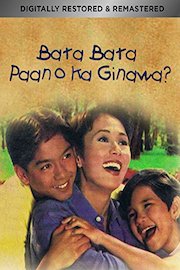
Bata, Bata. Pa'no Ka Ginawa?

Where to Watch Bata, Bata. Pa'no Ka Ginawa?

Bata, Bata... Pa'no Ka Ginawa? is an acclaimed Filipino movie from 1998 directed by Chito S. Roño and starring notable actors like Vilma Santos and Ariel Rivera. This remarkable film is an adaptation of the novel of the same name penned by Lualhati Bautista, who also wrote the screenplay. Also, the film is produced by Star Cinema and premiered in the Metro Manila Film Festival.
The center of the narrative is Lea Bustamante, played by the multi-awarded actress, Vilma Santos. She is an office worker, an activist, and above all, a mother. She carries multiple roles in her life, embodying a new era of empowered women who can thrive as professionals and mothers simultaneously. However, the complexities of her roles model the concept of feminism that is traditionally undermined in conservative Filipino culture.
The story follows Lea's struggle to balance her responsibilities and the ethical dilemmas that come with her life choices. As a single mother to two children of different fathers, Lea tackles societal judgments and stereotypes that often confront women who deviate from the so-called "norm." Lea’s children's fathers are portrayed by Albert Martinez and Ariel Rivera in compelling roles, each bringing a unique dynamic to Lea's life and forming a significant part of her journey.
Ariel Rivera portrays Raffy, Lea's much older partner and the source of emotional turmoil in her life. Meanwhile, Albert Martinez plays Ding, Lea's estranged husband who is the father of her daughter. The conflicts that arise between Lea and the men in her life shape the narrative's tension, creating a raw portrayal of the tribulations a single mother faces in the pursuit of her happiness and her children's well-being.
One significant aspect of the movie is its progressive rendition of a woman's character in a predominantly patriarchal society. Lea Bustamante's character breaks the customs and traditions that unfairly confine women to certain roles and expectations in society. She exhibits strength not only as a working woman but as someone who independently raises her children, Ojie and Maya, which are excellently played by Carlo Aquino and Serena Dalrymple.
Vilma Santos's performance in the film earned her best actress awards at the 1998 Metro Manila Film Festival and the 1999 Gawad Urian Awards. This underlines the importance of the movie in the landscape of Filipino cinema and enriches the narrative of women's empowerment films in the country.
"Bata, Bata... Pa'no Ka Ginawa?" is not just a domestic story but a social commentary on gender roles, motherhood, and the struggle for individuality within a conservative culture. The title, when translated, means "Child, Child... How Were You Made?" It is an apt descriptor for the film that explores themes of womanhood, maternity, and sexual awakening.
The cinematography and directorial style of Chito S. Roño lend a specific charm and authenticity to the film. The narrative and characters are not just plot devices but explore the deep-seated issues within the societal infrastructure. The attention to detail, palpable tension, and emotional depth masterfully portrayed by the cast make this film a must-watch.
However, despite its bold themes and impactful characters, "Bata, Bata... Pa'no Ka Ginawa?" is more than an exploration of a woman's struggle. It is an uplifting reminder of the strength and resilience of women, regardless of the nature of difficulties they face. It resonates with every viewer with its striking balance of drama and realism, making it a significant entry in the annals of Filipino cinema.
In a nutshell, "Bata, Bata... Pa'no Ka Ginawa?" is a powerful human drama that offers a significant reflection on the revolution of societal norms. With strong performances from an accomplished cast and thoughtful storytelling, it stands as a testament to the evolving status of women in society. This film not only entertains but also enlightens, giving audiences food for thought while providing an emotional ride through the life of its unforgettable heroine, Lea Bustamante.